Go Back

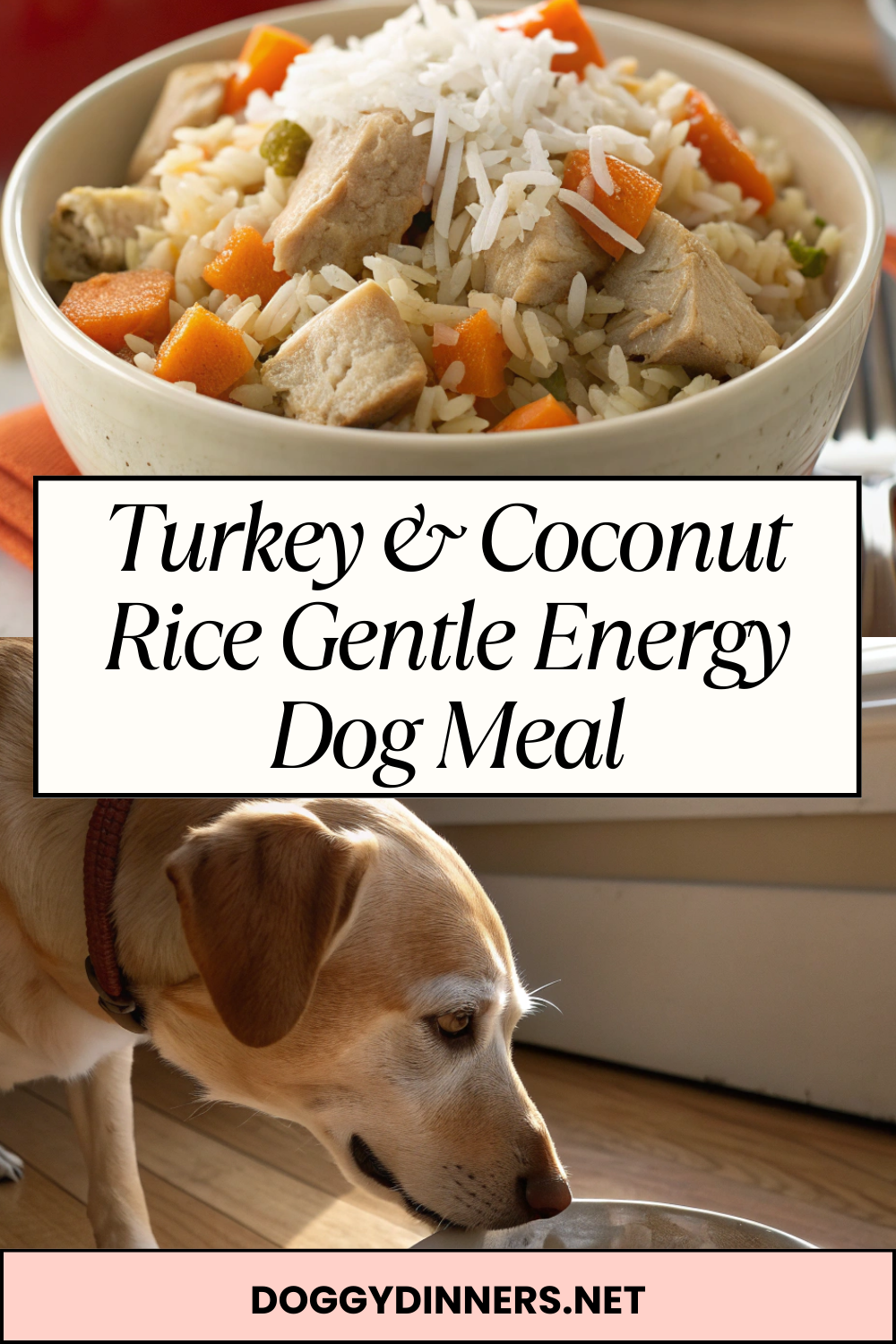
Turkey & Coconut Rice Gentle Energy Dog Meal

5 from 1 vote
This gentle turkey and coconut rice meal is a lightly seasoned, easily digestible occasional meal for dogs. It combines lean turkey, cooked rice, and mild vegetables with a touch of coconut for palatable energy without heavy fats or strong spices.
Perfect as a small lunch or an occasional dinner, the recipe focuses on simple, dog-safe ingredients prepared plainly and cooled before serving. Use it as a treat or a partial meal — not a complete diet.
Easy stovetop method, family-friendly ingredients, and straightforward storage instructions make this a practical choice for busy pet owners.
Introduce any new ingredient gradually and consult your veterinarian for dogs with special health needs.
Prep Time 15 minutes
Cook Time 30 minutes
Total Time 45 minutes
Servings: 4 servings
Calories: 220

Ingredients
  

Protein
  • 1 lb Lean ground turkey
Grains
  • 1 cup White rice (long-grain)
  • 2.25 cups Water (for cooking rice)
Vegetables & Coconut
  • 1 cup Carrot, peeled and diced
  • 1/2 cup Frozen peas (thawed)
  • 1/4 cup Pumpkin puree (unsweetened)
  • 2 tbsp Unsweetened shredded coconut
  • 1/3 cup Unsweetened canned coconut milk
Binders & Fats
  • 1 large Large egg, beaten
  • 1 tbsp Olive oil
Garnish (optional)
  • 1 tbsp Chopped fresh parsley

Equipment

  • Medium saucepan
  • Skillet or frying pan
  • Mixing bowl
  • Wooden spoon or spatula
  • Measuring cups and spoons
  • Fine mesh sieve

Method
 

Prepare ingredients
  1. Measure rice and water; rinse rice in a fine mesh sieve until water runs clear. Dice the carrot and thaw the peas if frozen. Open the coconut milk and pumpkin puree and set near the stove.
  2. Beat the egg in a small bowl and set aside. Chop parsley for garnish.
Cook the rice
  1. In a medium saucepan, combine rinsed rice and 2 1/4 cups water. Bring to a gentle boil, reduce heat to low, cover, and simmer for 15–20 minutes until the rice is tender and water is absorbed. Remove from heat and let sit covered 5 minutes, then fluff with a fork.
Cook turkey and vegetables
  1. While the rice cooks, heat 1 tablespoon olive oil in a skillet over medium heat. Add the ground turkey and break it up with a spatula. Cook, stirring occasionally, until the turkey is fully cooked and no longer pink (about 6–8 minutes).
  2. Add the diced carrot and cook 3–4 minutes until slightly tender. Stir in the thawed peas and cook 1–2 minutes more.
Finish and combine
  1. Lower heat to medium-low. Stir in 1/4 cup pumpkin puree, 1/3 cup coconut milk, and 2 tablespoons shredded coconut into the turkey and vegetables. Mix until warmed through (1–2 minutes).
  2. Pour the beaten egg evenly over the mixture and stir continuously for about 1 minute until the egg is cooked and incorporated. Remove skillet from heat.
  3. Combine the cooked rice with the turkey-coconut mixture in a large mixing bowl. Stir gently until evenly mixed. Taste for aroma (do not add salt or seasonings). Let the mixture cool to lukewarm before serving to your dog.
Serve and store
  1. Spoon appropriate portions into your dog’s bowl once the meal is cooled. Garnish each serving with a small sprinkle of chopped parsley if desired.
  2. Store leftovers in an airtight container in the refrigerator for up to 3 days or portion into freezer-safe containers for up to 2 months. Reheat a refrigerated portion gently until just warm and test temperature before serving.

Notes

Storage & Reheating

Refrigeration: Store in an airtight container for up to 3 days.
Freezing: Freeze portions in sealed containers for up to 2 months.
Reheating: Thaw overnight in the refrigerator if frozen; reheat gently on the stovetop or microwave until just warm and stir well. Always test temperature before serving to your dog.

Variations

Swap grains: Use cooked white rice or quick-cooking oats (adjust liquid and timing) for easier digestion.
Vegetable swaps: Replace carrots or peas with small amounts of finely chopped green beans or steamed sweet potato if preferred.
Protein swaps: Lean ground chicken or turkey breast are good alternatives; cook thoroughly and follow the same method.

FAQs

Is this meal suitable for puppies or small-breed dogs?
Portion size should be reduced for puppies and small breeds; consult your vet for age-appropriate portions and feeding frequency before offering to puppies under four months.
What if my dog has a known food allergy?
If your dog has allergies to poultry, coconut, or any listed ingredient, do not feed this recipe — substitute with an appropriate protein and consult your veterinarian.
How often can I feed this to my dog?
This recipe is intended as an occasional meal or treat, not a daily complete diet. Offer it occasionally alongside a balanced diet and track overall calorie intake.
Can I substitute brown rice or other grains?
Yes. Brown rice, quinoa, or cooked oats can be used, but adjust cooking times and liquid amounts accordingly and ensure grains are fully cooked and cooled.
Is it safe to store leftovers in the freezer?
Yes. Portion into freezer-safe containers and label with the date; use within 2 months for best quality and safety.
How much should I feed my dog per serving?
Portion depends on your dog’s size, age, and activity level. Start with a small sample (1–2 tablespoons for small dogs, 1/4–1/2 cup for medium dogs) and adjust while monitoring weight and digestion.
Any preparation tips to make it easier?
Cook rice first, then prepare the turkey mixture to minimize active time. Cool ingredients before combining and storing to reduce condensation in containers.
When should I not feed this meal?
Avoid feeding if your dog has active pancreatitis, severe food sensitivities, or a veterinary-advised restricted diet. Stop feeding if vomiting or diarrhea occurs and consult your vet.
Should I consult a veterinarian before trying this recipe?
Yes. Always check with your veterinarian before introducing new foods, especially for dogs with medical conditions, special diets, or significant weight concerns.

Conclusion

This is an occasional treat or meal.
Not a complete diet.
Introduce new foods gradually.
Consult a veterinarian for dogs with health conditions.