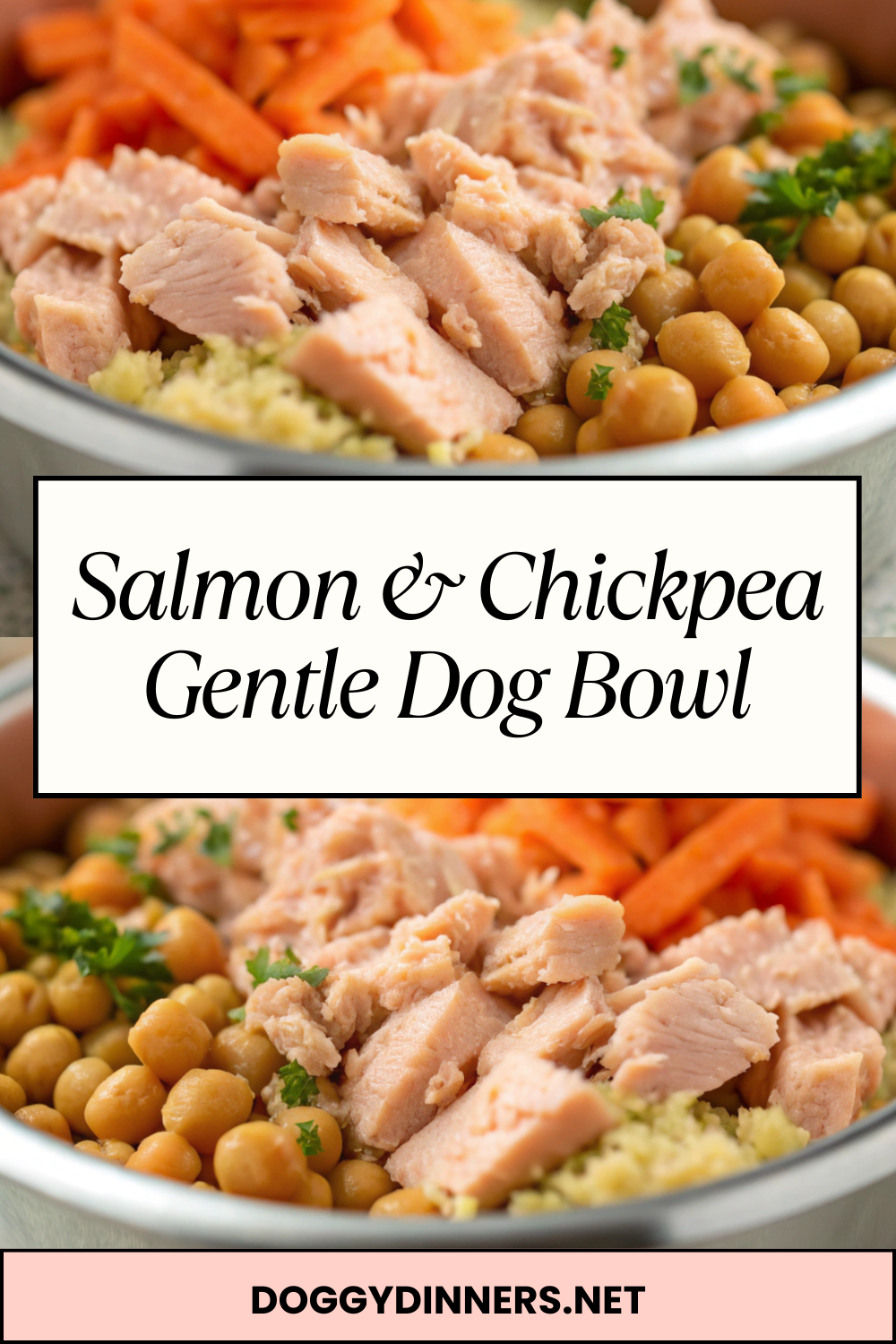
Ingredients
Equipment
Method
Step 1: Cook the Carrots
- Boil or steam the chopped carrots until very soft and tender.
- Drain well and set aside.
Step 2: Cook the Salmon
- Place salmon in a skillet or saucepan with water.
- Simmer gently until fully cooked and flaky.
Step 3: Flake and Check the Salmon
- Remove salmon from heat and allow to cool slightly.
- Flake thoroughly and carefully check for any remaining bones.
Step 4: Prepare the Chickpeas
- Mash the cooked chickpeas until mostly smooth.
- Remove any large skins if present.
Step 5: Combine the Ingredients
- In a large pot or skillet, combine flaked salmon, mashed chickpeas, and cooked carrots.
- Stir gently until evenly mixed.
Step 6: Add Oil and Moisture
- Drizzle olive oil over the mixture.
- Add remaining water gradually if needed to keep the bowl moist.
Step 7: Adjust Texture
- Mash lightly for a smoother consistency.
- Leave slightly chunky for dogs who prefer texture.
Step 8: Cool Before Serving
- Remove from heat and allow the meal to cool completely.
- Portion according to your dog’s size and intended use.
Notes
🧊 Storage & Reheating ❄️
Store cooled portions in airtight containers in the refrigerator for up to 3 days.
Freeze individual portions for up to 2 months. Thaw frozen portions in the refrigerator and serve at room temperature. Do not serve hot. Important reminder: This recipe is not complete or balanced and should not replace long-term dog food feeding. 🥄 Variations Replace carrots with well-cooked zucchini Use mashed texture for senior dogs Add extra water for a stew-style dog food topper Replace chickpeas with cooked lentils if tolerated Introduce all variations gradually. ❓ 10 FAQs Is salmon safe for dogs?
Yes, when fully cooked and deboned. Are chickpeas safe for dogs?
Yes, when fully cooked and fed in moderation. Can this replace regular dog food?
No, it is not a complete diet. Is this recipe hypoallergenic?
No medical or allergy claims are made. Can puppies eat this?
Puppies may have small portions with veterinarian approval. Is this recipe grain-free?
Yes, it contains no grains. Can I use canned salmon?
Fresh cooked salmon is preferred; avoid added salt. How often can I feed this?
Occasionally, not daily. Can I add supplements?
Only if directed by your veterinarian. Should I consult my vet first?
Yes, especially if your dog has allergies or dietary needs. 🏁 Conclusion This Salmon & Chickpea Gentle Dog Bowl is a simple homemade option for dog parents who want to offer occasional variety using limited, recognizable ingredients. With soft textures and careful preparation, it works well as a topper or short-term rotation when used responsibly. Always introduce new foods gradually, feed in moderation, and rely on your veterinarian for guidance tailored to your dog’s individual needs.
Freeze individual portions for up to 2 months. Thaw frozen portions in the refrigerator and serve at room temperature. Do not serve hot. Important reminder: This recipe is not complete or balanced and should not replace long-term dog food feeding. 🥄 Variations Replace carrots with well-cooked zucchini Use mashed texture for senior dogs Add extra water for a stew-style dog food topper Replace chickpeas with cooked lentils if tolerated Introduce all variations gradually. ❓ 10 FAQs Is salmon safe for dogs?
Yes, when fully cooked and deboned. Are chickpeas safe for dogs?
Yes, when fully cooked and fed in moderation. Can this replace regular dog food?
No, it is not a complete diet. Is this recipe hypoallergenic?
No medical or allergy claims are made. Can puppies eat this?
Puppies may have small portions with veterinarian approval. Is this recipe grain-free?
Yes, it contains no grains. Can I use canned salmon?
Fresh cooked salmon is preferred; avoid added salt. How often can I feed this?
Occasionally, not daily. Can I add supplements?
Only if directed by your veterinarian. Should I consult my vet first?
Yes, especially if your dog has allergies or dietary needs. 🏁 Conclusion This Salmon & Chickpea Gentle Dog Bowl is a simple homemade option for dog parents who want to offer occasional variety using limited, recognizable ingredients. With soft textures and careful preparation, it works well as a topper or short-term rotation when used responsibly. Always introduce new foods gradually, feed in moderation, and rely on your veterinarian for guidance tailored to your dog’s individual needs.