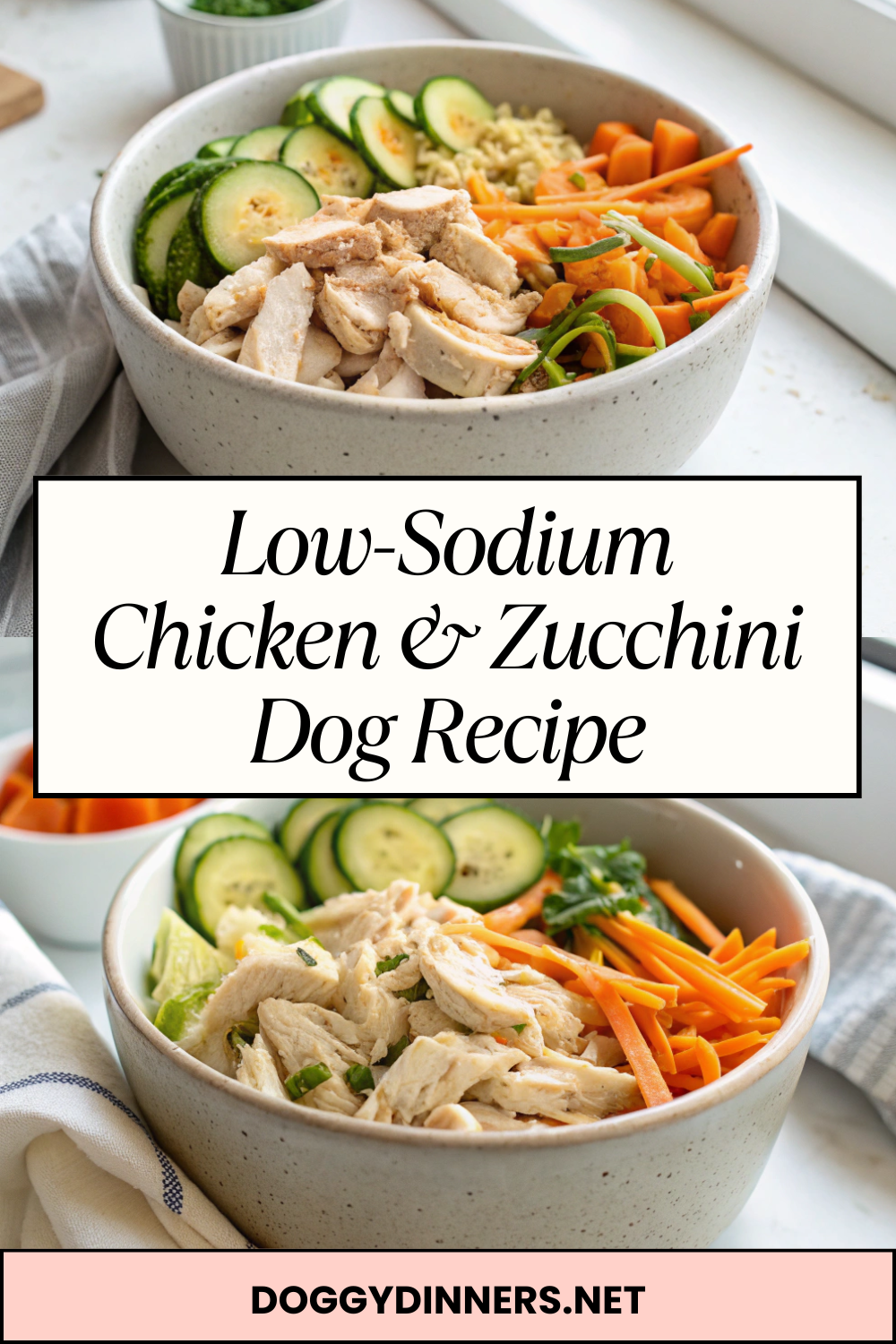
Ingredients
Equipment
Method
Step 1: Cook the chicken.
- Place chicken breast in a pot with water. Simmer over medium heat until fully cooked. Remove, shred finely, and set aside. Reserve cooking liquid.
Step 2: Cook the vegetables.
- In the same pot, add carrots and zucchini. Simmer for 8–10 minutes until very soft and easy to digest.
Step 3: Add rice.
- Stir in cooked white rice and mix well with the vegetables.
Step 4: Combine chicken.
- Return shredded chicken to the pot and gently stir until evenly distributed.
Step 5: Add healthy fat.
- Remove from heat and stir in olive oil for calories and nutrient absorption.
Step 6: Cool completely.
- Allow the meal to cool fully before serving or storing.
Notes
Storage ❄️:
Refrigerate in airtight containers for 4 days ❄️
Freeze in portioned servings for up to 2 months ❄️
Thaw overnight in the refrigerator and serve at room temperature
⚕️ Nutritional Notes (macros or benefits)
Chicken Breast: Lean, low-sodium protein supporting muscle health
Zucchini: Hydration, fiber, and low-calorie fullness
Carrots: Beta-carotene for immune and eye support
White Rice: Gentle energy source with minimal mineral load
Olive Oil: Adds calories without sodium; supports skin and coat
This recipe prioritizes hydration, digestibility, and sodium control.
🥄 Variations (dog-safe only)
Ultra–Low Sodium Version: Skip carrots and increase zucchini slightly
Grain-Free Option: Replace rice with mashed sweet potato
Senior Dog Soft Meal: Lightly mash before serving
Chicken & Pumpkin Bowl: Replace carrots with pumpkin purée
Extra Hydration Stew: Add warm water before serving
❓ 10 FAQs
Why is low sodium important for dogs?
It supports heart, kidney, and overall systemic health. Is zucchini safe for dogs?
Yes—especially cooked and finely chopped. Can dogs eat this every day?
Yes, with vet-approved supplementation if used long-term. Why no broth?
Even low-sodium broths can add unnecessary salt. Can puppies eat this meal?
Only with veterinary guidance for growth needs. Is white rice better than brown rice here?
Yes—white rice is easier to digest and lower in minerals. Can I use frozen vegetables?
Yes—plain, unseasoned frozen zucchini and carrots are fine. Is olive oil safe for dogs?
Yes—in controlled amounts. Can I mix this with prescription diets?
Yes—many vets allow partial fresh-food mixing. Should I add supplements?
Only vet-recommended supplements after cooking. 🏁 Conclusion
Low-Sodium Chicken & Zucchini Dog Recipe is a clean, gentle, and heart-conscious meal designed for dogs who need careful sodium control without sacrificing nutrition or flavor. With lean protein, hydrating vegetables, and simple carbohydrates, this recipe supports long-term wellness in a safe, approachable way. Always consult your veterinarian for dogs on restricted diets, and use this meal as part of a thoughtful fresh-feeding plan.
It supports heart, kidney, and overall systemic health. Is zucchini safe for dogs?
Yes—especially cooked and finely chopped. Can dogs eat this every day?
Yes, with vet-approved supplementation if used long-term. Why no broth?
Even low-sodium broths can add unnecessary salt. Can puppies eat this meal?
Only with veterinary guidance for growth needs. Is white rice better than brown rice here?
Yes—white rice is easier to digest and lower in minerals. Can I use frozen vegetables?
Yes—plain, unseasoned frozen zucchini and carrots are fine. Is olive oil safe for dogs?
Yes—in controlled amounts. Can I mix this with prescription diets?
Yes—many vets allow partial fresh-food mixing. Should I add supplements?
Only vet-recommended supplements after cooking. 🏁 Conclusion
Low-Sodium Chicken & Zucchini Dog Recipe is a clean, gentle, and heart-conscious meal designed for dogs who need careful sodium control without sacrificing nutrition or flavor. With lean protein, hydrating vegetables, and simple carbohydrates, this recipe supports long-term wellness in a safe, approachable way. Always consult your veterinarian for dogs on restricted diets, and use this meal as part of a thoughtful fresh-feeding plan.