Ingredients
Equipment
Method
Step 1: Cook the Chicken
- Boil chicken breast in plain water until fully cooked through.
- Shred or finely chop into small, dog-safe pieces.
Step 2: Prepare the White Rice
- Cook white rice according to package instructions using plain water only—no salt, seasoning, or oil.
Step 3: Cook the Vegetables
- Steam carrots and green beans until soft and easily mashable.
- Avoid seasoning or oil.
Step 4: Combine All Ingredients
- In a large bowl, mix chicken, rice, and vegetables until evenly incorporated.
Step 5: Add Optional Digestive Support
- Stir in pumpkin purée or chopped boiled egg if desired.
Step 6: Cool & Serve
- Allow the meal to cool completely before serving to your dog.
Notes
🧊 Storage & Reheating ❄️
Refrigerate for up to 3 days in airtight containers.
Freeze for up to 2 months in portioned containers.
Thaw overnight in the fridge before serving.
Rewarm lightly if needed—never serve hot.
🥄 Variations
Ultra-Sensitive Stomach: Use boiled chicken + rice only.
Turkey Version: Substitute chicken with lean ground turkey.
Fiber Boost: Add 1–2 tbsp pumpkin purée.
Low-Allergen: Replace vegetables with cooked zucchini or mashed sweet potato.
Hydration Helper: Add warm water or low-sodium chicken broth (dog-safe).
❓ 10 FAQs
Is this suitable for dogs with diarrhea?
Yes—white rice and boiled chicken are standard vet-recommended foods. Can I use brown rice instead?
For sensitive stomachs, white rice is gentler. Can puppies eat this?
Yes, but adjust portions—check with your vet. Can I use canned chicken?
Not recommended—often contains sodium. Is it okay for dogs with pancreatitis?
Yes—as long as chicken is skinless and low-fat; confirm with your vet. Can I add seasoning?
No—dogs’ stomachs need plain foods. Can I use frozen vegetables?
Yes—choose plain, unseasoned ones. How do I know the right serving size?
Generally ½–1 cup per 20 lbs of body weight; ask your vet for precision. Can I mix this with kibble?
Yes—great as a topper. Can I feed this long-term?
It’s safe short-term; long-term feeding should be discussed with your vet to ensure balanced nutrition. 🏁 Conclusion
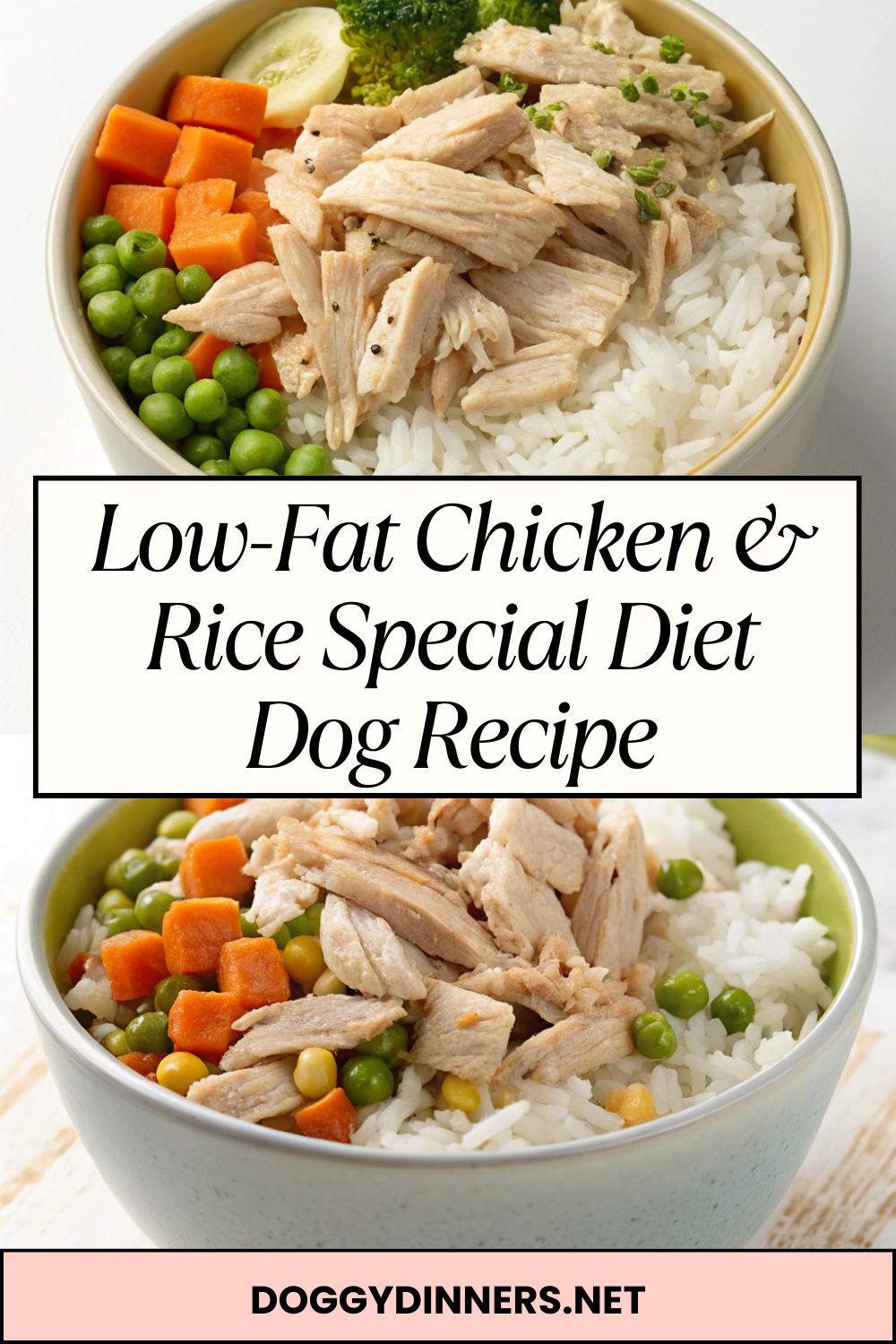
This Low-Fat Chicken & Rice Special Diet Dog Recipe is gentle, nourishing, and ideal for sensitive tummies or dogs needing a low-fat, easy-to-digest meal. With lean chicken, soothing rice, and soft vegetables, it delivers comfort and nutrition your pup will appreciate—especially during recovery or digestive flare-ups.
Yes—white rice and boiled chicken are standard vet-recommended foods. Can I use brown rice instead?
For sensitive stomachs, white rice is gentler. Can puppies eat this?
Yes, but adjust portions—check with your vet. Can I use canned chicken?
Not recommended—often contains sodium. Is it okay for dogs with pancreatitis?
Yes—as long as chicken is skinless and low-fat; confirm with your vet. Can I add seasoning?
No—dogs’ stomachs need plain foods. Can I use frozen vegetables?
Yes—choose plain, unseasoned ones. How do I know the right serving size?
Generally ½–1 cup per 20 lbs of body weight; ask your vet for precision. Can I mix this with kibble?
Yes—great as a topper. Can I feed this long-term?
It’s safe short-term; long-term feeding should be discussed with your vet to ensure balanced nutrition. 🏁 Conclusion
This Low-Fat Chicken & Rice Special Diet Dog Recipe is gentle, nourishing, and ideal for sensitive tummies or dogs needing a low-fat, easy-to-digest meal. With lean chicken, soothing rice, and soft vegetables, it delivers comfort and nutrition your pup will appreciate—especially during recovery or digestive flare-ups.