Go Back

Grain-Free Chicken & Squash Special Diet Recipe

5 from 1 vote
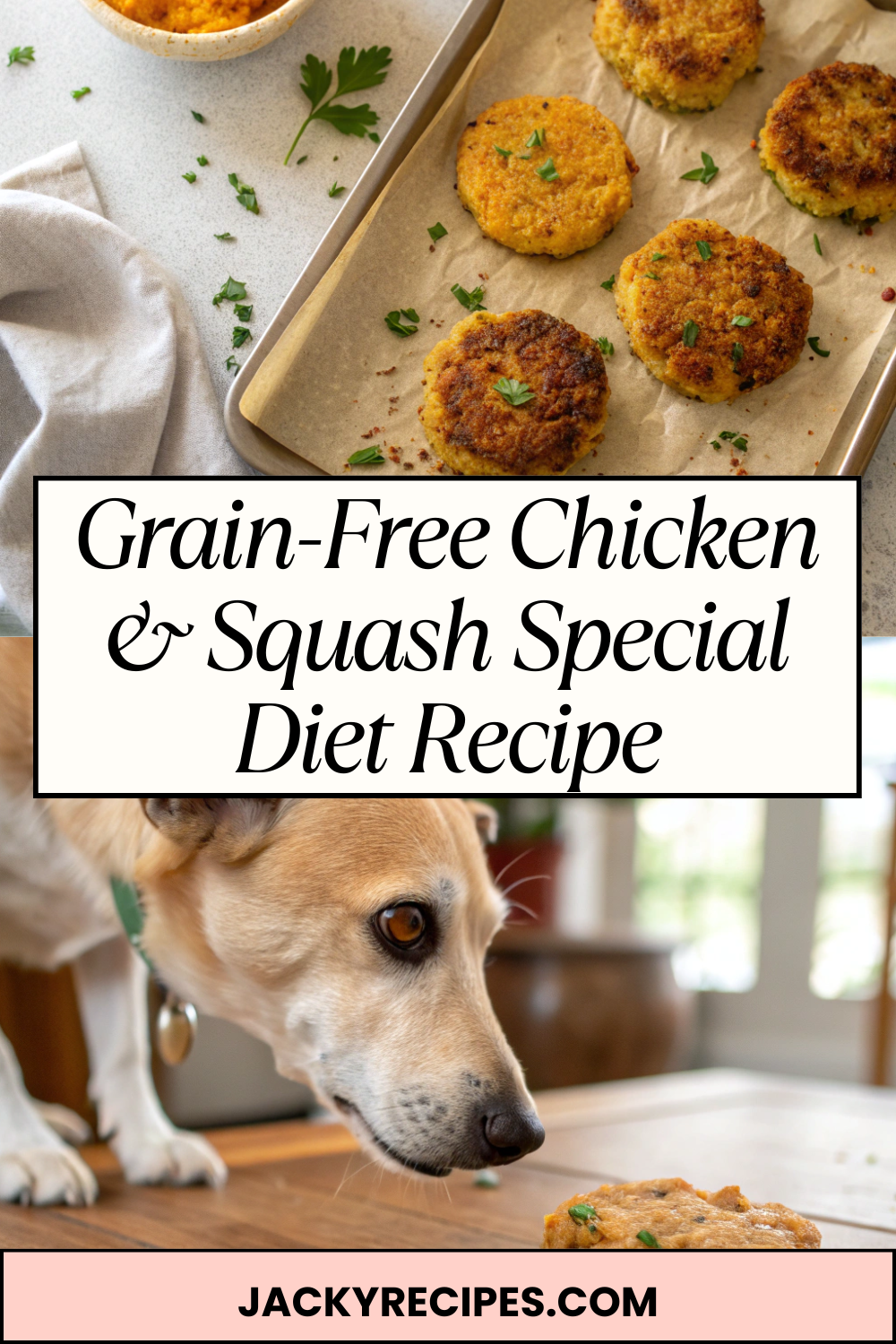
This grain-free Chicken & Squash Special Diet Recipe is a simple, home-cooked occasional meal designed for dogs with grain sensitivities. Made with lean chicken, cooked squash, apple and carrot, it provides a gently balanced treat-style meal using only dog-safe ingredients. The recipe is easy to prepare, bakes into mini patties, and can be portioned and stored for convenient feeding. Perfect for pet owners seeking a grain-free homemade option to rotate into their dog’s diet under veterinary guidance.
Prep Time 20 minutes
Cook Time 30 minutes
Total Time 50 minutes
Servings: 6 servings
Calories: 220

Ingredients
  

Protein
  • 1 lb boneless skinless chicken breast, cooked and shredded
Vegetables & Fruit
  • 1 cup mashed butternut squash (or canned plain pumpkin)
  • 1/4 cup carrot, finely grated
  • 1/4 cup apple, cored and finely grated (no seeds)
Binders & Flours
  • 2 large large eggs
  • 2 tbsp ground flaxseed
  • 1/2 cup coconut flour
  • 1/4 cup tapioca starch
Liquids & Flavor
  • 2 tbsp unsalted chicken broth
  • 1 tbsp olive oil
  • 1 tbsp fresh parsley, finely chopped

Equipment

  • Mixing bowl
  • Measuring cups and spoons
  • Mixing spoon or spatula
  • Baking sheet
  • Parchment paper
  • fork (for shredding chicken)
  • Oven
  • Wire cooling rack for cooling patties

Method
 

Prepare ingredients
  1. Preheat the oven to 350°F (175°C). Line a baking sheet with parchment paper.
  2. If your chicken is not yet cooked: poach or bake boneless skinless chicken until fully cooked (internal temperature 165°F/74°C), then shred with a fork. Measure 1 lb cooked shredded chicken.
  3. If using fresh squash, peel, dice and roast or steam until very soft, then mash to make 1 cup of mashed squash. Grate the carrot and the cored apple; chop the parsley.
Mix and form patties
  1. In a small bowl, combine the ground flaxseed with 6 tablespoons (90 ml) water and let sit 5 minutes to thicken (flax gel).
  2. In a large mixing bowl combine shredded chicken, mashed squash, grated carrot, grated apple, olive oil and chopped parsley. Stir until evenly mixed.
  3. Add the eggs and the prepared flax gel to the chicken mixture and stir to combine.
  4. Slowly fold in the coconut flour and tapioca starch, then add the 2 tablespoons unsalted chicken broth if the mixture seems dry. Mix until a moist, moldable dough forms.
  5. Shape the mixture into 6 even patties (about 1/2 cup mixture each) and place them on the prepared baking sheet. Flatten slightly so they cook through evenly.
Bake and cool
  1. Bake patties in the preheated oven for 25–30 minutes, until they are set and lightly golden at the edges. Internal temperature should be warm and patties should be firm to the touch.
  2. Remove from oven and let cool on the baking sheet for 10 minutes, then transfer to a wire rack to finish cooling completely before serving.
Serve and store
  1. Serve an appropriate portion for your dog’s size (see FAQs). Refrigerate leftovers in an airtight container for up to 4 days, or freeze individual portions for up to 3 months.
  2. Thaw frozen portions overnight in the refrigerator and warm gently to room temperature before serving.

Notes

Storage & Reheating

Refrigerate cooked patties in an airtight container for up to 4 days. For longer storage, freeze individual portions for up to 3 months. Thaw in the refrigerator overnight and warm gently to room temperature before serving; avoid microwaving to very hot temperatures.

Variations

You can substitute cooked turkey for chicken, and plain canned pumpkin for butternut squash. If your dog tolerates different binders, almond flour may replace part of the coconut flour in small amounts; reduce oil if using higher-fat substitutions. Always avoid adding onion, garlic, or artificial sweeteners.

FAQs

Is this recipe suitable for puppies and small breeds?
Smaller dogs and older puppies can eat this in small portions; cut patties into appropriately sized pieces and consult your veterinarian for puppies under 6 months or dogs with special needs.
What if my dog has food allergies?
If your dog is allergic to chicken, substitute cooked turkey or a plain white fish and check with your veterinarian before trying new proteins.
How often can I feed these patties?
Feed these as an occasional meal or treat—no more than a few times per week depending on portion size and your dog’s overall diet to avoid overfeeding.
Can I substitute other flours?
For a grain-free option, limited substitutions include almond flour or additional tapioca starch, but adjust liquids. Avoid wheat/oat flours if keeping it grain-free.
How should I store leftovers safely?
Keep refrigerated in an airtight container for up to 4 days; freeze individual portions for up to 3 months to maintain freshness and safety.
How much should I feed my dog per serving?
Portion control depends on weight and activity. As a guideline: small dogs (under 20 lb) 1–2 patties; medium dogs (20–50 lb) 1–3 patties; large dogs (50+ lb) 2–4 patties—adjust and consult your vet for exact portions.
Any preparation tips to prevent the patties from falling apart?
Ensure chicken is well-shredded, let the flax gel thicken before adding, and press patties firmly when shaping. If mixture is too wet, add a little more coconut flour or tapioca starch sparingly.
When should I NOT feed this recipe?
Avoid if your dog has known allergies to any ingredient (chicken, eggs, coconut, etc.), a history of pancreatitis, or is on a veterinarian-prescribed therapeutic diet unless approved by your vet.
Can dogs with sensitive stomachs handle squash and apple?
Many dogs tolerate plain cooked squash and small amounts of apple well, but introduce new foods gradually and monitor for digestive upset.
Should I check with my vet before serving this regularly?
Yes. Always consult your veterinarian before adding homemade meals regularly, especially for dogs with medical conditions.

Conclusion

This grain-free Chicken & Squash recipe is intended as an occasional treat or meal and is not a complete balanced diet. Introduce new foods gradually and observe your dog for any changes. For dogs with health conditions, allergies, or special dietary needs, consult a veterinarian before offering homemade recipes. Adjust portions for size and activity level; this recipe is meant to complement, not replace, a complete diet.