Go Back

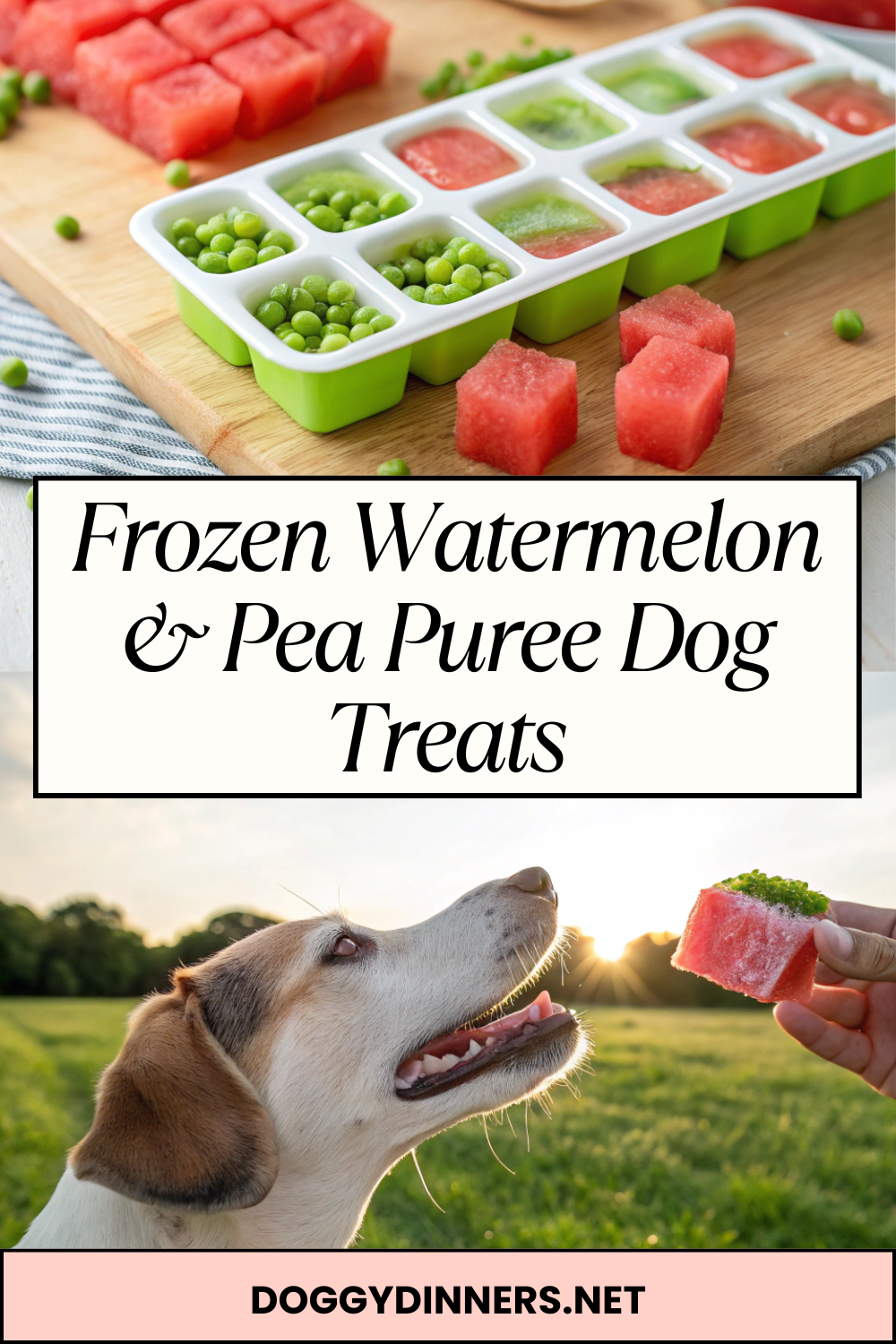
Frozen Watermelon & Pea Puree Dog Treats

5 from 1 vote
Cool, hydrating frozen treats made from seedless watermelon, peas and plain Greek yogurt — perfect for warm days or a fun snack. These single-ingredient-forward cubes are blended smooth for easy portioning and gentle digestion. Frozen in silicone molds or ice cube trays, they thaw quickly for a refreshing bite-sized dog treat.
Quick to prepare and naturally low in fat, this recipe uses only dog-safe ingredients and is intended as an occasional treat or snack, not a full meal. Great for summer enrichment or training rewards when given in moderation.
Simple, pantry-friendly, and freezer-stable: make a batch and keep extras on hand for busy weeks or playtime rewards.
Follow portion guidance in the FAQs for safe serving sizes by dog size.
Prep Time 15 minutes
Cook Time 4 hours
Total Time 4 hours 15 minutes
Servings: 12 servings
Calories: 30

Ingredients
  

Main ingredients
  • 2 cups Seedless watermelon, cubed and rind removed
  • 1/2 cup Frozen peas, thawed
Dairy
  • 1/2 cup Plain unsweetened Greek yogurt (full-fat or low-fat)
For thinning
  • 2 tablespoons Cold water (only if needed for blending)

Equipment

  • Sharp knife
  • Cutting board
  • Measuring cups and spoons
  • Blender or food processor
  • Spoon
  • Silicone molds or ice cube tray
  • Airtight freezer-safe container

Method
 

Prep
  1. Cut seedless watermelon into cubes and remove any stray seeds; measure 2 cups of flesh.
  2. Thaw frozen peas until slightly soft and measure 1/2 cup. Measure yogurt and water.
Blend
  1. Place watermelon cubes, thawed peas, and Greek yogurt in a blender or food processor. Add 1–2 tablespoons cold water only if needed to help the mixture move.
  2. Blend on medium-high until completely smooth and even in texture (about 30–45 seconds). Stop and scrape down the sides once if needed.
Portion and freeze
  1. Carefully spoon or pour the puree into silicone molds or an ice cube tray, filling each cavity evenly. Leave a small air gap at the top as the mixture may expand slightly.
  2. Place molds on a flat section of your freezer and freeze for at least 4 hours, or until fully solid.
Serve & store
  1. Pop frozen cubes from the molds and transfer to an airtight, freezer-safe container or resealable bag. Label with the date.
  2. Serve one small cube as a treat; thaw for a few minutes at room temperature if too hard for your dog. Discard any uneaten portion after 1–2 hours at room temperature.

Notes

Quick Notes

Storage & Reheating

Store frozen cubes in an airtight, freezer-safe container for up to 3 months. Do not refreeze thawed cubes. There is no reheating required — serve slightly thawed for easier biting. Always discard treats that smell off or show freezer burn.
Variations

Variations

Swap plain Greek yogurt for plain unsweetened yogurt if needed, keeping the same volume. For a creamier texture use full-fat Greek yogurt. Do not add sweeteners, chocolate, or onion/garlic-containing ingredients.
FAQs

FAQs

Is this treat suitable for puppies and small-breed dogs?
Yes for most puppies older than 8 weeks and small breeds, but offer smaller portions and supervise until you know how your dog handles frozen textures. For very young puppies or dogs with few teeth, let cubes thaw partially before serving.
What if my dog has food allergies?
If your dog has known allergies to dairy or peas, omit the offending ingredient and consult your veterinarian for safe alternatives. Introduce any new ingredient gradually while observing for reactions.
How often can I give these treats?
These are intended as occasional treats. For most dogs, 1–2 small cubes a few times per week is reasonable; adjust based on size, daily calories, and activity level.
Can I substitute the yogurt or peas?
Yes. Substitute plain unsweetened yogurt with a plain dairy-free yogurt that has no artificial sweeteners if your dog is sensitive to dairy. Swap peas for an equal volume of cooked green beans if preferred.
How should I store leftovers and how long are they safe?
Store frozen cubes in the freezer up to 3 months. Once thawed, keep refrigerated and use within 24–48 hours; do not refreeze thawed cubes.
How many calories are in one cube and how do I control portions?
Estimated calories are about 30 kcal per small cube (varies by mold size). Use small cubes for small dogs and larger dogs can have one or two; factor treats into daily calorie allowance to avoid overfeeding.
Any tips for preparing the puree smoothly?
Use a high-speed blender and add 1–2 tablespoons of cold water if the mixture is too thick. Pulse first, then blend continuously until smooth. Scrape down sides for an even texture.
When should I NOT feed these to my dog?
Avoid feeding if your dog has a veterinarian-diagnosed intolerance to any ingredient used (watermelon, peas, or yogurt) or if your dog is on a vet-prescribed therapeutic diet without prior approval.
Should I consult my vet before serving these treats?
Yes—consult your veterinarian before introducing new foods if your dog has health conditions (diabetes, pancreatitis, kidney disease) or is on a special diet.
Are there choking risks with frozen treats?
Yes—always supervise when giving frozen treats. Offer appropriately sized pieces for your dog and allow partial thawing for dogs that tend to gulp or have dental issues.
Conclusion

Conclusion

Frozen Watermelon & Pea Puree Dog Treats are a refreshing, simple option for occasional snacks. This recipe is not a complete diet and should be used as an occasional treat or meal component only. Introduce new foods gradually and watch for any adverse reactions. For dogs with health conditions or special dietary needs, consult your veterinarian before offering new foods.