Ingredients
Equipment
Method
Step 1: Prepare the Chicken and Rice
- Ensure the chicken is fully cooked and shredded finely.
- Make sure the rice is soft and slightly cooled.
Step 2: Blend the Base
- Add chicken, rice, and 1½ cups water to a blender or food processor.
- Blend until smooth and pourable.
Step 3: Adjust Consistency
- Check the texture of the mixture.
- Add more water gradually if needed so it pours easily into molds.
Step 4: Fill the Molds
- Pour the mixture into silicone molds, ice cube trays, or pup pop molds.
- Tap gently on the counter to remove air bubbles.
Step 5: Freeze Until Solid
- Place molds on a flat freezer-safe tray.
- Freeze for at least 4–6 hours, or until fully solid.
Step 6: Unmold and Store
- Remove frozen pup pops from molds.
- Transfer to an airtight freezer-safe container.
Notes
🧊 Storage & Reheating ❄️
Store frozen pup pops in an airtight container in the freezer for up to 2 months.
Serve directly from frozen. Do not microwave or thaw completely. Reminder: These are treats only, not complete meals. Always supervise your dog when offering frozen treats. 🥄 Variations Chicken & Pumpkin Pops: Replace ¼ cup rice with plain pumpkin puree Extra-Smooth Pops: Blend longer and add additional water Mini Lick Cubes: Freeze in shallow molds for faster melting Senior-Friendly Option: Let pops soften slightly before serving Introduce all variations gradually. ❓ 10 FAQs Is chicken safe for dogs?
Yes, when cooked plainly and fed in moderation. Is rice safe for dogs?
Yes, fully cooked white rice is commonly used in dog treats. Are these pops hard when frozen?
They freeze firm but soften as dogs lick them. Can puppies eat frozen pup pops?
Puppies may have very small portions under supervision. Do these treats replace meals?
No, they are occasional treats only. Can I use chicken broth instead of water?
Plain water is preferred to avoid excess salt. Are these good for hot weather?
They can be refreshing but don’t replace water or shade. How often can I feed frozen treats?
Occasionally, not daily. Can I add vegetables?
Only dog-safe vegetables like pumpkin or carrot, in small amounts. Should I consult my vet first?
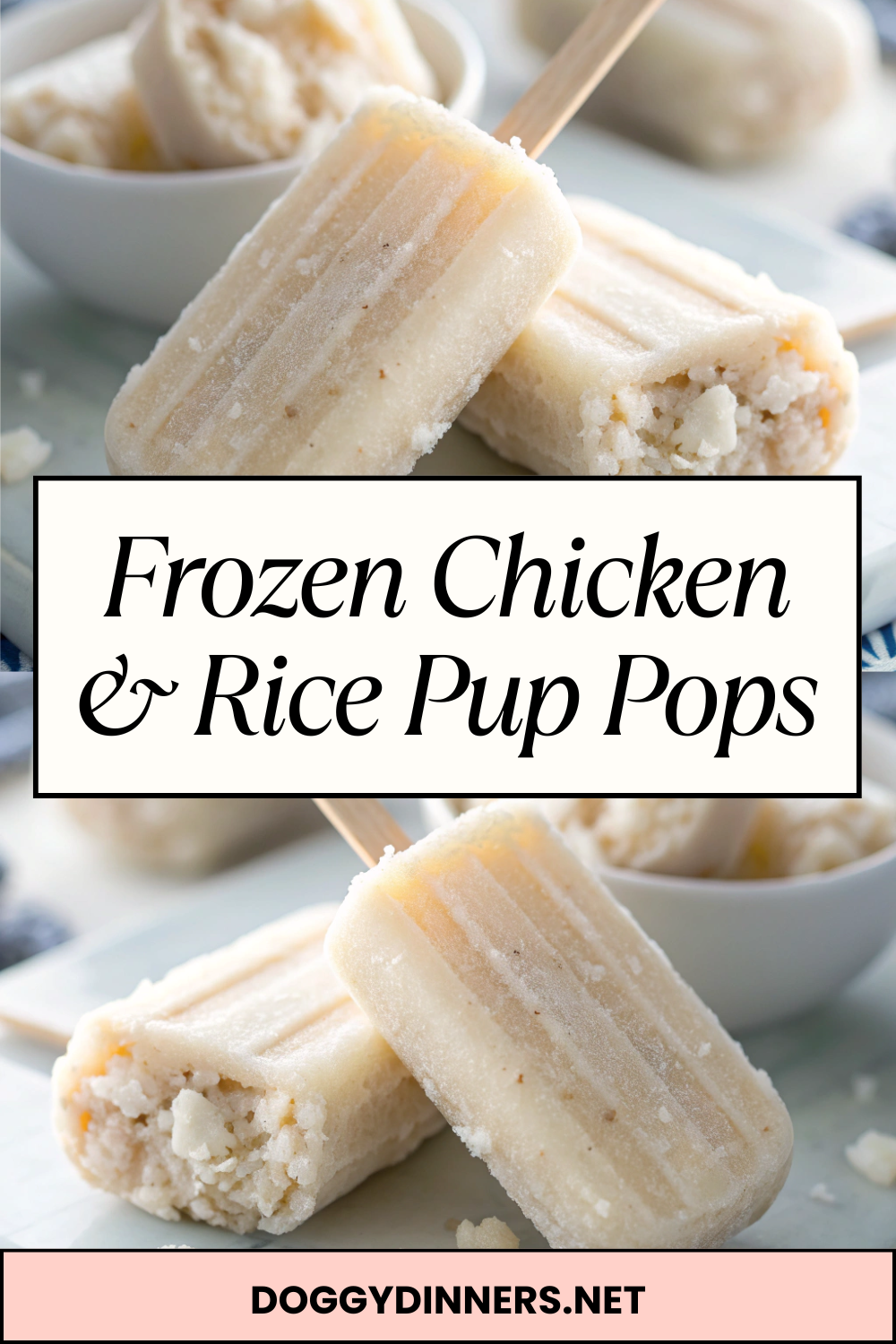
Yes, if your dog has allergies or special dietary needs. 🏁 Conclusion These Frozen Chicken & Rice Pup Pops are a savory, refreshing homemade option for dogs who love meaty flavors. Easy to make and freezer-friendly, they’re perfect for warm days or enrichment time when fed responsibly and in moderation. Always introduce new treats slowly, keep portions appropriate, and rely on your veterinarian for guidance if your dog has dietary or medical concerns.
Serve directly from frozen. Do not microwave or thaw completely. Reminder: These are treats only, not complete meals. Always supervise your dog when offering frozen treats. 🥄 Variations Chicken & Pumpkin Pops: Replace ¼ cup rice with plain pumpkin puree Extra-Smooth Pops: Blend longer and add additional water Mini Lick Cubes: Freeze in shallow molds for faster melting Senior-Friendly Option: Let pops soften slightly before serving Introduce all variations gradually. ❓ 10 FAQs Is chicken safe for dogs?
Yes, when cooked plainly and fed in moderation. Is rice safe for dogs?
Yes, fully cooked white rice is commonly used in dog treats. Are these pops hard when frozen?
They freeze firm but soften as dogs lick them. Can puppies eat frozen pup pops?
Puppies may have very small portions under supervision. Do these treats replace meals?
No, they are occasional treats only. Can I use chicken broth instead of water?
Plain water is preferred to avoid excess salt. Are these good for hot weather?
They can be refreshing but don’t replace water or shade. How often can I feed frozen treats?
Occasionally, not daily. Can I add vegetables?
Only dog-safe vegetables like pumpkin or carrot, in small amounts. Should I consult my vet first?
Yes, if your dog has allergies or special dietary needs. 🏁 Conclusion These Frozen Chicken & Rice Pup Pops are a savory, refreshing homemade option for dogs who love meaty flavors. Easy to make and freezer-friendly, they’re perfect for warm days or enrichment time when fed responsibly and in moderation. Always introduce new treats slowly, keep portions appropriate, and rely on your veterinarian for guidance if your dog has dietary or medical concerns.