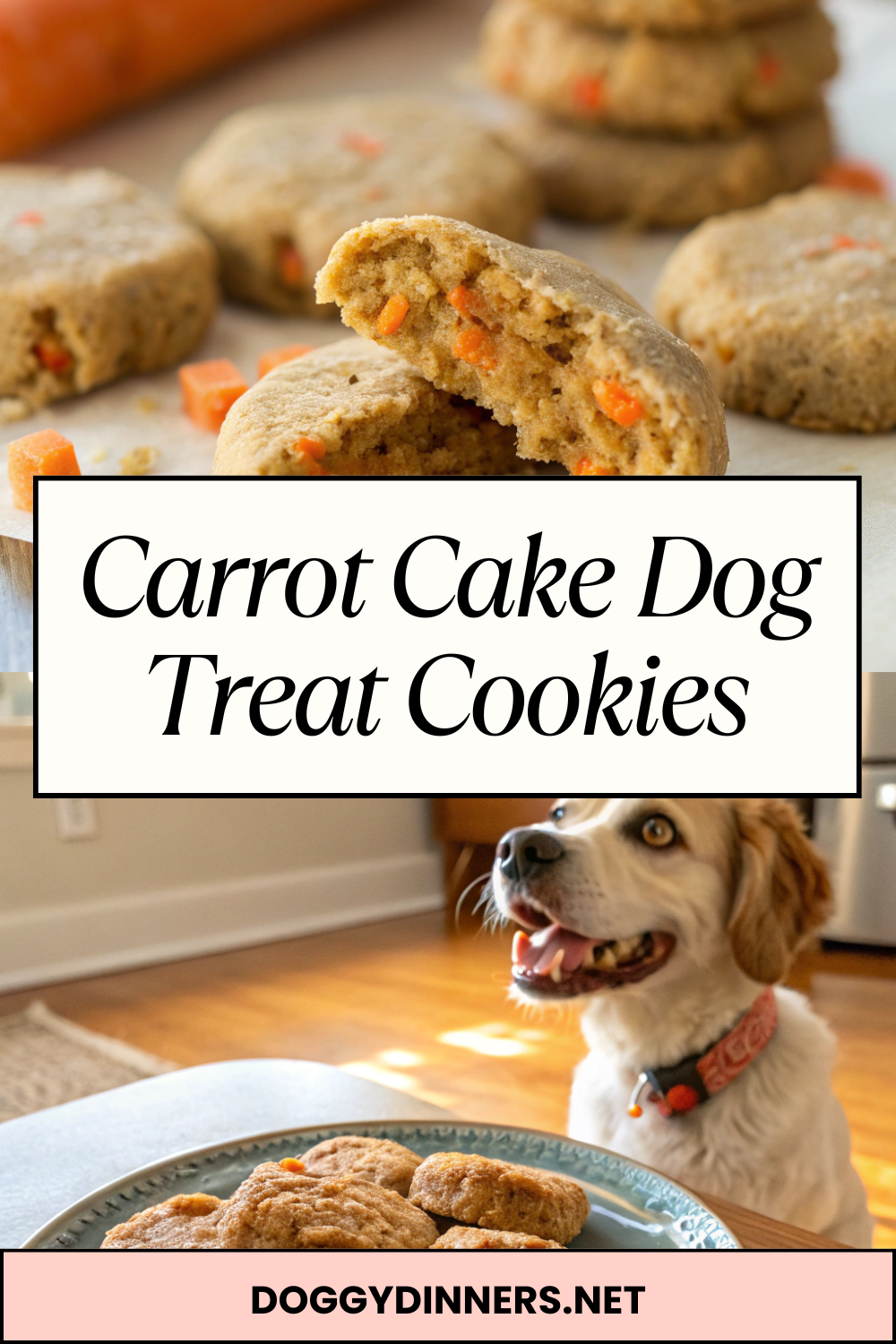
Ingredients
Equipment
Method
Step 1: Prepare the Oven and Pan
- Preheat your oven to 325°F (165°C).
- Line a baking sheet with parchment paper.
Step 2: Prepare the Produce
- Finely grate the carrot and apple.
- Lightly squeeze out excess moisture if very wet.
Step 3: Mix the Wet Ingredients
- In a large bowl, combine grated carrot, grated apple, egg, and olive oil.
- Stir until evenly mixed.
Step 4: Add the Dry Ingredients
- Add oat flour and rolled oats to the bowl.
- Mix until a thick, soft dough forms.
Step 5: Adjust Dough Texture
- Add water gradually while mixing.
- Stop once the dough is sticky but scoopable.
Step 6: Shape the Cookies
- Scoop small portions of dough onto the prepared baking sheet.
- Gently flatten each cookie slightly with the back of a spoon.
Step 7: Bake Until Set
- Bake for 18–22 minutes.
- Cookies should be set and soft, not browned or crunchy.
Step 8: Cool Completely
- Transfer cookies to a wire rack.
- Allow to cool fully before serving.
Notes
🧊 Storage & Reheating ❄️
Store fully cooled cookies in an airtight container in the refrigerator for up to 5 days.
Freeze for up to 2 months for longer storage. Thaw frozen cookies at room temperature before serving. Do not microwave. Reminder: These are treats only, not complete meals. Feed in moderation and introduce new treats gradually. Consult your veterinarian if your dog has allergies or dietary restrictions. 🥄 Variations Replace apple with mashed ripe banana Make mini cookies for training rewards Mash the dough extra smooth for senior dogs Bake a few minutes less for extra-soft cookies Introduce all variations slowly. ❓ 10 FAQs Is carrot safe for dogs?
Yes, especially when finely grated or cooked. Are apples safe for dogs?
Yes, when peeled, cored, and seed-free. Do these cookies taste like real carrot cake?
They are carrot cake–inspired, not sweet or spiced like human cake. Are these cookies soft or crunchy?
They are soft-baked and tender. Can puppies eat these cookies?
Yes, in small pieces and under supervision. Are these grain-free?
No, they contain oats. Can I add cinnamon or nutmeg?
No spices are needed or recommended. Do these cookies replace meals?
No, they are occasional treats only. How often can I feed these?
Treats should make up a small portion of daily intake. Should I talk to my vet first?
Yes, especially if your dog has special dietary needs. 🏁 Conclusion These Carrot Cake Dog Treat Cookies are a fun, dog-safe way to enjoy a classic flavor idea without any unsafe ingredients. Soft, simple, and easy to make, they’re perfect for occasional rewarding when fed responsibly. Always introduce new treats gradually, keep portions appropriate, and rely on your veterinarian for guidance tailored to your dog’s needs.
Freeze for up to 2 months for longer storage. Thaw frozen cookies at room temperature before serving. Do not microwave. Reminder: These are treats only, not complete meals. Feed in moderation and introduce new treats gradually. Consult your veterinarian if your dog has allergies or dietary restrictions. 🥄 Variations Replace apple with mashed ripe banana Make mini cookies for training rewards Mash the dough extra smooth for senior dogs Bake a few minutes less for extra-soft cookies Introduce all variations slowly. ❓ 10 FAQs Is carrot safe for dogs?
Yes, especially when finely grated or cooked. Are apples safe for dogs?
Yes, when peeled, cored, and seed-free. Do these cookies taste like real carrot cake?
They are carrot cake–inspired, not sweet or spiced like human cake. Are these cookies soft or crunchy?
They are soft-baked and tender. Can puppies eat these cookies?
Yes, in small pieces and under supervision. Are these grain-free?
No, they contain oats. Can I add cinnamon or nutmeg?
No spices are needed or recommended. Do these cookies replace meals?
No, they are occasional treats only. How often can I feed these?
Treats should make up a small portion of daily intake. Should I talk to my vet first?
Yes, especially if your dog has special dietary needs. 🏁 Conclusion These Carrot Cake Dog Treat Cookies are a fun, dog-safe way to enjoy a classic flavor idea without any unsafe ingredients. Soft, simple, and easy to make, they’re perfect for occasional rewarding when fed responsibly. Always introduce new treats gradually, keep portions appropriate, and rely on your veterinarian for guidance tailored to your dog’s needs.