Go Back

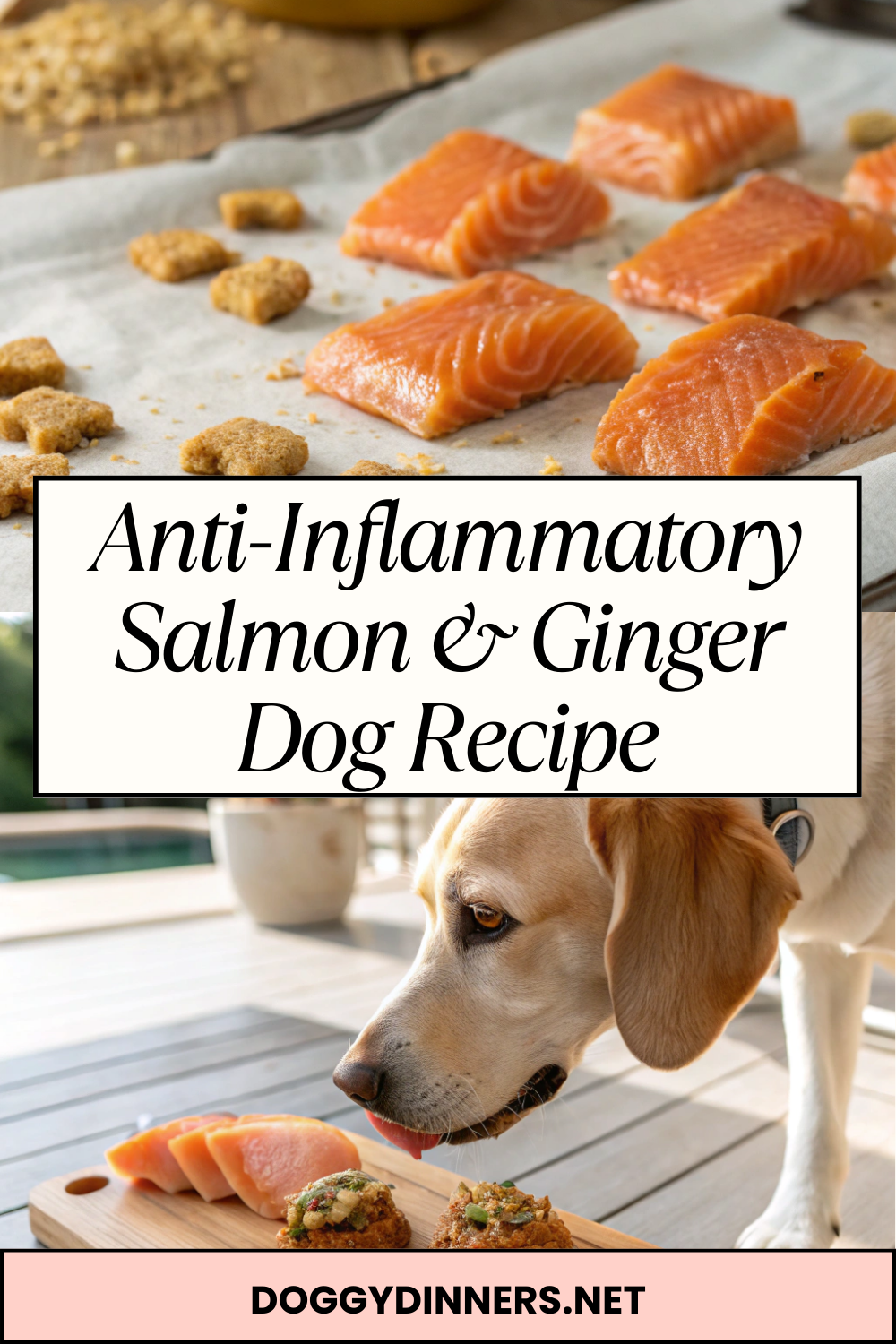
Anti-Inflammatory Salmon & Ginger Dog Recipe

5 from 1 vote
This simple homemade salmon and ginger recipe makes a nutrient-rich occasional meal or treat for dogs. It combines cooked, boneless salmon with oats, pumpkin, and a touch of fresh ginger for flavor—kept in small amounts appropriate for dogs. The recipe is easy to prepare, bakes quickly, and yields small portions ideal for training rewards or a special meal.
Use human-grade, plain ingredients and introduce new foods gradually. Follow portion guidance for your dog’s size and consult a veterinarian for dogs with health concerns or special diets. Store leftovers properly and serve cooled.
Perfect for owners who want a wholesome, baked salmon bite without added salt, sugars, or unsafe seasonings. Recipe makes about six small servings suitable as an occasional treat or meal supplement.
Prep Time 15 minutes
Cook Time 20 minutes
Total Time 35 minutes
Servings: 6 servings
Calories: 115

Ingredients
  

Protein
  • 170 g Cooked boneless salmon (skin removed)
  • 1 large Egg
Wet ingredients
  • 60 g Plain unsweetened Greek yogurt
  • 60 g Canned unsweetened pumpkin puree
  • 1 tsp Fresh ginger, finely grated
  • 1 tsp Olive oil
  • 1-2 tbsp Cold water (to adjust dough)
Dry & finishing
  • 50 g Rolled oats
  • 60 g Oat flour (or finely ground oats)
  • 1 tbsp Fresh flat-leaf parsley, finely chopped

Equipment

  • Oven
  • Baking sheet
  • Parchment paper
  • Mixing bowl
  • Food processor or blender (or spice grinder)
  • Measuring cups and spoons
  • Spatula or spoon
  • Wire cooling rack

Method
 

Preparation
  1. Preheat the oven to 180°C (350°F). Line a baking sheet with parchment paper.
  2. Flake the cooked salmon into a bowl, checking carefully for any small bones and removing them.
  3. In a small food processor or blender, pulse the rolled oats until a coarse flour forms if you don’t have oat flour.
Mixing and shaping
  1. In a mixing bowl, combine flaked salmon, egg, Greek yogurt, pumpkin puree, grated ginger, olive oil, and chopped parsley. Stir until evenly mixed.
  2. Add the oat flour and processed oats to the wet mix. Stir and add 1–2 tablespoons of cold water as needed to form a firm but pliable dough.
  3. Scoop tablespoon-sized portions and shape into small patties or flatten slightly for bites. Place on the prepared baking sheet with space between pieces.
Baking and cooling
  1. Bake in the preheated oven for 15–20 minutes, until edges are lightly golden and the patties are set. Do not overbake; you want them cooked through but still moist.
  2. Remove from oven and let cool on a wire rack until completely cool before serving. Cool completely to room temperature to avoid burning your dog’s mouth.
Serving and storage
  1. Serve a small portion appropriate to your dog’s size (see FAQ for portion guidance). Store cooled leftovers in an airtight container in the refrigerator for up to 3 days or freeze for up to 3 months.
  2. When reheating, warm briefly and allow to cool to room temperature before offering to your dog.

Notes

Occasional Treat
Not a Complete Diet
Introduce Slowly
Consult Vet If Needed
All Ingredients Used Below

Storage & Reheating

Store cooled bites in an airtight container in the refrigerator for up to 3 days. For longer storage, freeze in a single layer on a tray then transfer to a freezer bag for up to 3 months. Reheat briefly in a microwave or warm oven until just warmed through, then cool to room temperature before serving.

Variations

Swap oat flour for brown rice flour for a grain variation, or replace parsley with a small pinch of chopped cilantro if preferred. Use cooked white fish instead of salmon if your dog prefers a milder flavor. Keep ginger to 1 tsp total to avoid stomach upset.

FAQs

What sizes or ages of dogs is this recipe suitable for?
This recipe is suitable for adult dogs and larger puppies (over 6 months) as an occasional treat. For very small or elderly dogs, break bites into smaller pieces and monitor for chewing difficulty.
Are there allergy considerations I should know about?
If your dog has a known fish, egg, or grain allergy, do not use this recipe. Substitute safely—e.g., use a bland cooked white-meat protein and an alternative flour—and consult your veterinarian before trying new ingredients.
How often can I feed these to my dog?
Feed these as an occasional treat or small meal supplement—no more than a few times per week depending on portion size and your dog’s overall calorie needs.
What safe ingredient substitutions are recommended?
Substitute oat flour with brown rice flour for grain-sensitive dogs, replace Greek yogurt with plain unsweetened cottage cheese in small amounts, or use cooked white fish if salmon isn’t available.
Is it safe to store these in the fridge?
Yes—store in an airtight container in the refrigerator up to 3 days. Freeze any portions you won’t use within that time frame.
How do I control portions for different-sized dogs?
Small dogs: 1–2 teaspoons as a treat. Medium dogs: 1–2 small patties. Large dogs: 2–3 patties. Adjust based on activity level and overall daily calories.
Any tips for preparing this recipe?
Check carefully for any salmon bones before mixing. Use a food processor to achieve a uniform texture so bites hold together easily. Keep ginger finely grated and limited to the stated amount.
When should I NOT feed this to my dog?
Avoid this recipe if your dog has food sensitivities to fish, eggs, dairy, or oats, or if they are on a veterinarian-prescribed elimination or medical diet. Also skip if the dog is vomiting, has diarrhea, or shows acute illness.
Should I consult my veterinarian first?
Yes—consult your veterinarian before introducing this recipe if your dog has chronic health conditions, is on medication, or requires a special therapeutic diet.
Can I use raw salmon instead of cooked?
Do not use raw salmon. Cook salmon thoroughly and remove bones to reduce risk of pathogens and choking hazards.

Conclusion

These salmon and ginger bites are intended as an occasional treat or small meal supplement—not a complete diet. Introduce new foods gradually, watch for any digestive changes, and consult your veterinarian for dogs with health conditions. 🐾