Go Back

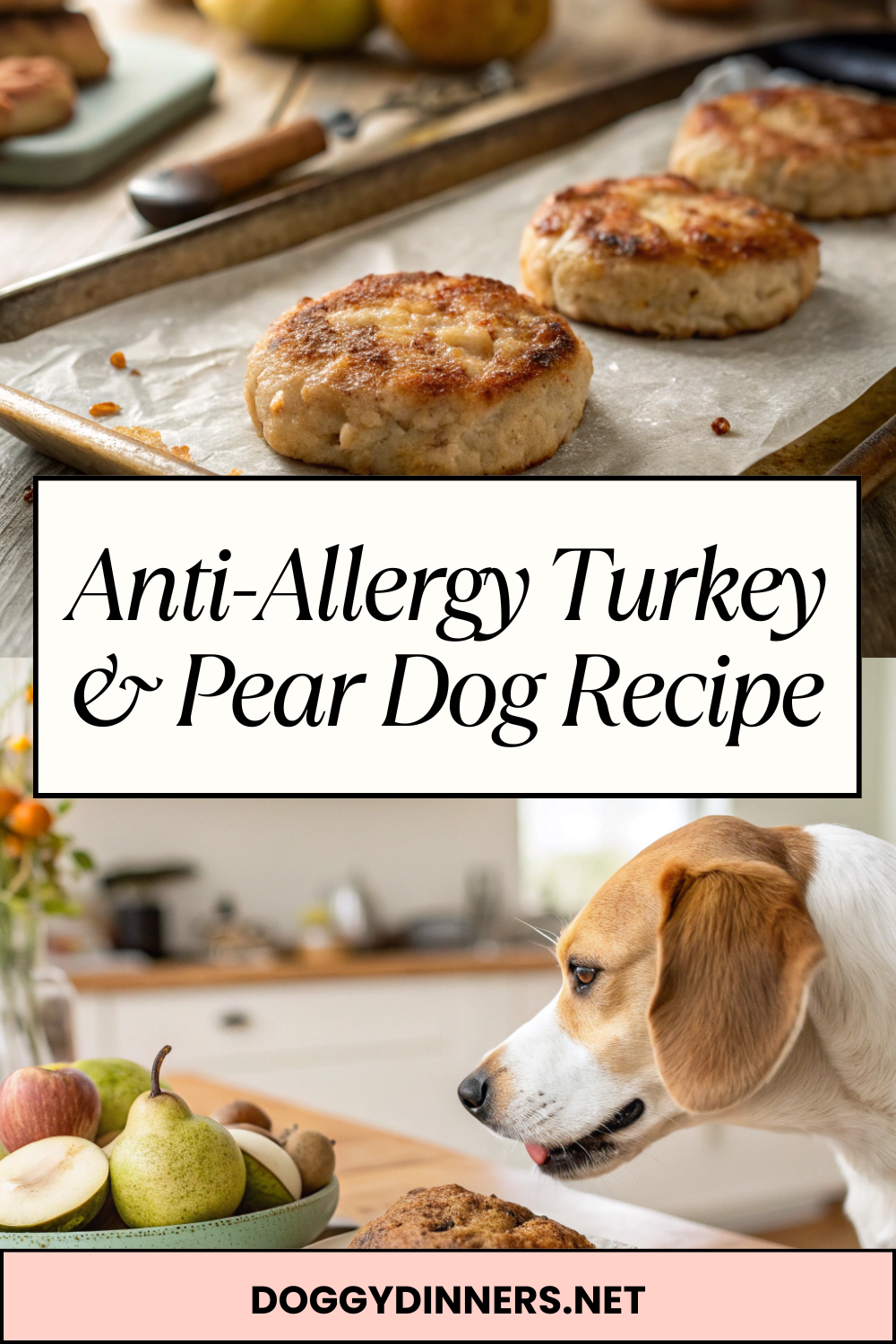
Anti-Allergy Turkey & Pear Dog Recipe

5 from 1 vote
This simple, limited-ingredient turkey and pear recipe is crafted for occasional home-made meals or treats for dogs. It uses lean turkey, ripe pear, pumpkin and oats to keep the ingredient list short and easy to digest.
Prepared in small patties and baked until firm, these make a convenient snack or small meal topper. The mild flavors and single-protein base make it a good option when you want to avoid common allergens.
Use plain unsweetened yogurt as a finish if desired — serve in moderation. Always introduce new foods gradually and monitor your dog for any reactions.
Yield: about 12 small patties; suitable as an occasional treat or supplemental meal.
Prep Time 15 minutes
Cook Time 20 minutes
Total Time 35 minutes
Servings: 12 servings
Calories: 110

Ingredients
  

Protein & Wet Ingredients
  • 1 cup (approx. 200 g) Lean ground turkey
  • 1/4 cup Canned plain pumpkin puree
  • 1 large Large egg
  • 1 tablespoon Extra-virgin olive oil
  • 1 small (about 100 g) Ripe pear (peeled, cored, diced)
Dry Ingredients
  • 3/4 cup Rolled oats
  • 1/2 cup Rice flour
  • 1 tablespoon Ground flaxseed
  • 1 teaspoon Dried parsley (optional for fresh scent)
Serving & Optional
  • 2 tablespoons Plain unsweetened yogurt (for serving)

Equipment

  • Mixing bowl
  • Food processor or blender
  • Measuring cups and spoons
  • Baking sheet
  • Parchment paper
  • Spatula
  • Cooling rack

Method
 

Prepare & Mix
  1. Preheat oven to 350°F (175°C). Line a baking sheet with parchment paper.
  2. Place the rolled oats in a food processor or blender and pulse until mostly ground to a coarse flour.
  3. In a mixing bowl combine the ground oats, rice flour, ground flaxseed and dried parsley; mix to combine.
  4. Add the ground turkey, pumpkin puree, egg, olive oil and diced pear to the dry mix. Gently fold until a uniform mixture forms. The pear adds moisture; if mixture is too wet, add 1–2 tablespoons more rice flour.
Shape & Cook
  1. Divide the mixture into 12 equal portions and shape into small patties (about 1–1.5 inches thick). Place on the prepared baking sheet, leaving a little space between each.
  2. Bake in the preheated oven for 18–20 minutes, until patties are cooked through and no longer pink in the center. Larger patties may need a few extra minutes.
  3. Remove from oven and transfer the patties to a cooling rack. Allow to cool completely before serving.
Serve & Finish
  1. Serve plain or top with a small spoon of plain unsweetened yogurt when offering as an occasional treat or meal supplement.
  2. Store unused cooled patties as described below and reheat lightly if desired (see Storage & Reheating). Introduce to your dog gradually and observe for any sensitivity.

Notes

Storage & Reheating

Refrigeration
Store fully cooled patties in an airtight container in the refrigerator for up to 3 days.
Freezing
Freeze patties on a tray until firm, then transfer to a sealed freezer bag for up to 2 months. Thaw in the refrigerator before use.
Thawing & Reheating
Reheat thawed portions briefly in a microwave (10–15 seconds) or warm in a low oven until just warm. Allow to cool to a safe temperature before offering to your dog.
Serving
Serve plain or with a small dollop of plain unsweetened yogurt. Because this is an occasional meal or treat, keep portions modest relative to your dog’s size and daily calories.
Safety
Avoid feeding the core and seeds of the pear; use only the peeled, cored flesh. Do not add salt, spices, or sweeteners.

Variations

Substitute cooked white rice for rice flour to make a softer patty (adjust oats or binder to absorb moisture). For dogs not sensitive to dairy, a teaspoon of plain cottage cheese may be mixed into the batter.
For a grain-free version, replace the oats with a small amount of cooked mashed sweet potato and increase flaxseed slightly to help bind.

FAQs

Is this recipe suitable for small or large dogs?
Yes; adjust portion size. Small dogs should receive one small patty as a treat, while medium to large dogs can have one to two patties occasionally. Monitor calorie intake.
What if my dog has food allergies?
This recipe uses a single fresh protein (turkey) and limited ingredients but is not guaranteed hypoallergenic. If your dog is diagnosed with specific allergies, check ingredients carefully and consult your veterinarian before offering.
How often can I feed these patties?
Offer these as an occasional treat or small supplemental meal — not daily as a complete diet. Frequency depends on your dog’s caloric needs; ask your vet for guidance.
Can I substitute the pear with another fruit?
Safe small substitutions include peeled apple (no seeds) or mashed banana in small amounts. Do not use grapes, raisins, or citrus. Adjust moisture and binding accordingly.
How should I store leftovers safely?
Refrigerate cooled patties for up to 3 days or freeze for up to 2 months. Thaw in the refrigerator and reheat only to lukewarm before serving.
How do I control portion size and calories?
These patties are intended as occasional treats or meal supplements. Account for the calories in your dog’s daily intake; reduce regular food portions if offering as a supplemental meal.
Any tips for preparing for picky eaters?
Offer one small warmed patty or crumble a patty over regular food. A tiny dab of plain unsweetened yogurt can increase palatability for some dogs.
When should I NOT feed this recipe to my dog?
Avoid if your dog has a known intolerance to turkey, pear, eggs, or any listed ingredient. Do not feed if your dog is on a veterinary-prescribed elimination diet unless approved by the vet.
Should I consult my vet before offering this recipe?
Yes. Consult your veterinarian before introducing new foods, especially for dogs with medical conditions, dietary restrictions, or a history of food sensitivities.
How should I introduce this recipe to my dog?
Introduce a small amount on day one and observe for 24–48 hours for any digestive upset or allergic reaction. Increase serving size gradually if well tolerated.

Conclusion

This recipe is intended as an occasional treat or supplemental meal and is not a complete diet. Introduce new foods gradually and monitor your dog for any reaction. Consult your veterinarian for guidance if your dog has health conditions or dietary restrictions. 🐶🌿