🎉 Introduction
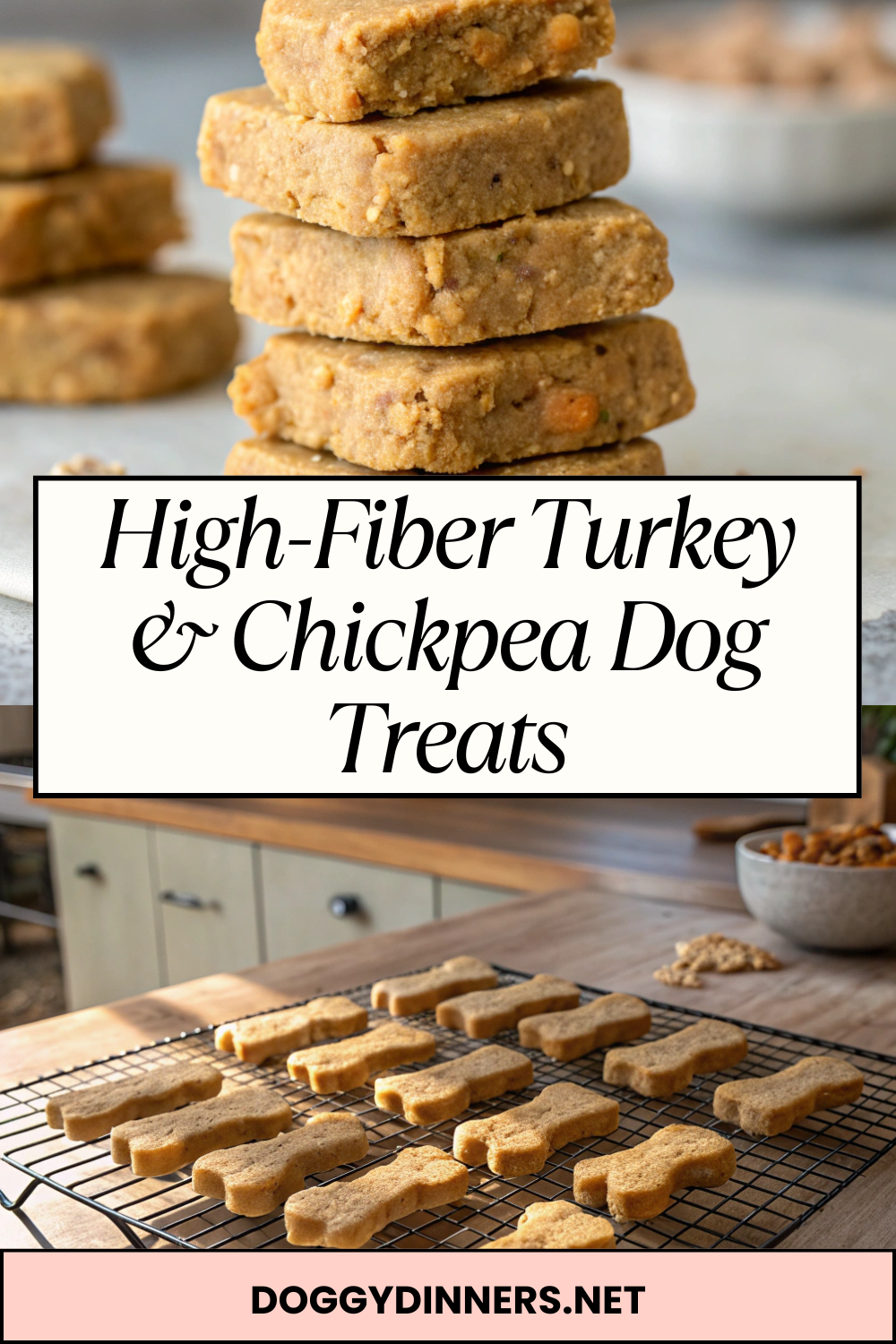
Homemade dog treats allow pet parents to control ingredients while offering dogs new flavors and textures in a thoughtful way. These High-Fiber Turkey & Chickpea Dog Treats are designed as occasional dog treats that combine lean protein with simple, plant-based ingredients commonly used in dog-friendly recipes.
Lean ground turkey is widely used in homemade dog treats because it has a mild aroma and works well in soft-baked textures when cooked plainly. Chickpeas (also known as garbanzo beans), when fully cooked and unseasoned, are often included in dog treat recipes in small amounts for texture and variety. In this recipe, chickpeas are mashed and blended into the dough rather than served whole, making the treats easier to portion and chew.
The term “high-fiber” here refers only to the inclusion of fiber-containing ingredients such as chickpeas and oats. This recipe does not make medical or digestive claims and is not intended to address or manage any health condition. These treats are simply meant to add variety and enjoyment to your dog’s treat routine.
As always, treats should be fed in moderation and tailored to your dog’s individual size, age, and dietary needs.
🧰 Equipment Needed
- Medium skillet
- Food processor or blender
- Large mixing bowl
- Measuring cups and measuring spoons
- Silicone spatula or wooden spoon
- Baking sheet
- Parchment paper
- Spoon or small cookie scoop
- Wire cooling rack
🛒 Ingredients
- 1 pound lean ground turkey (unseasoned)
- 1 cup cooked chickpeas (plain, unsalted, skins removed if loose)
- 1 cup rolled oats
- 1 large egg
- 2 tablespoons olive oil
- ¼ cup water
Ingredient notes:
- Chickpeas must be fully cooked and completely plain—no salt, no spices, no onion or garlic.
- Ground turkey should be cooked thoroughly before mixing.
- Rolled oats help bind moisture and add structure to soft-baked treats.
👩🍳 Directions
Step 1: Preheat your oven to 350°F (175°C) and line a baking sheet with parchment paper.
Step 2: Heat a medium skillet over medium heat and cook the ground turkey until fully done, breaking it apart as it cooks. Remove from heat and allow to cool slightly.
Step 3: Place the cooked chickpeas into a food processor or blender and blend until mostly smooth, with no large chunks remaining.
Step 4: In a large mixing bowl, combine the cooked turkey, blended chickpeas, egg, and olive oil. Mix until evenly incorporated.
Step 5: Add the rolled oats to the bowl and stir until the mixture thickens.
Step 6: Gradually add the water, mixing as you go, until the mixture becomes moist and scoopable but not runny.
Step 7: Scoop small portions of the mixture onto the prepared baking sheet, gently flattening each portion with the back of a spoon.
Step 8: Bake for 22–25 minutes, or until the treats are set and lightly golden on the bottom.
Step 9: Turn off the oven and leave the treats inside with the door slightly open for 10 minutes to help them firm up.
Step 10: Transfer the treats to a wire rack and allow them to cool completely before serving.
🍽️ Servings & Timing
- Yield: Approximately 30–36 soft dog treats
- Prep Time: 20 minutes
- Bake Time: 25 minutes
- Cooling Time: 30 minutes
Serving size should be adjusted based on your dog’s size. These treats can be broken into smaller pieces for training or portion control.
🧊 Storage & Reheating ❄️
Store fully cooled treats in an airtight container in the refrigerator for up to 5 days. For longer storage, freeze for up to 3 months in a sealed, freezer-safe container.
Thaw frozen treats in the refrigerator or at room temperature before serving. Reheating is not necessary.
Important reminder: These treats are not complete meals. Feed occasionally and introduce new treats gradually.
🥄 Variations
- Turkey & Pumpkin Treats: Replace half of the chickpeas with plain pumpkin puree for a softer texture.
- Mini Training Bites: Scoop smaller portions and slightly reduce baking time.
- Grain-Free Option: Replace oats with additional mashed chickpeas and adjust moisture carefully.
- Senior-Friendly Texture: Bake a few minutes less for a softer chew.
Always monitor your dog when introducing variations.
❓ 10 FAQs
- Are chickpeas safe for dogs?
Yes, when fully cooked, plain, and fed in small amounts. - Can puppies eat these treats?
Puppies can have very small portions under supervision. - Do these treats help digestion?
This recipe does not make medical claims; it is simply an occasional treat. - Can I use canned chickpeas?
Yes, if thoroughly rinsed and unsalted. - Is turkey better than beef for dogs?
Both are commonly used; turkey is often chosen for its mild flavor. - How soft are these treats?
They are soft-baked and slightly chewy once cooled. - Can I make them crunchy?
These treats are designed to stay soft rather than crisp. - Are these good for training?
Yes, especially when made in smaller sizes. - How many treats per day is okay?
Treats should only make up a small portion of daily calories. - Should I talk to my vet first?
If your dog has allergies, digestive sensitivities, or a special diet, consult your veterinarian.
🏁 Conclusion
These High-Fiber Turkey & Chickpea Dog Treats offer a soft, protein-forward option for dog parents who enjoy making homemade treats with simple, recognizable ingredients. Designed strictly for occasional feeding, they add variety and enjoyment without unnecessary additives or unsafe components.
As with all homemade dog treats, moderation is key. Introduce new treats slowly, keep portions appropriate, and consult your veterinarian if you have any concerns about your dog’s individual dietary needs.
High-Fiber Turkey & Chickpea Dog Treats
Ingredients
Equipment
Method
- Step 1: Preheat your oven to 350°F (175°C) and line a baking sheet with parchment paper.
- Step 2: Heat a medium skillet over medium heat and cook the ground turkey until fully done, breaking it apart as it cooks. Remove from heat and allow to cool slightly.
- Step 3: Place the cooked chickpeas into a food processor or blender and blend until mostly smooth, with no large chunks remaining.
- Step 4: In a large mixing bowl, combine the cooked turkey, blended chickpeas, egg, and olive oil. Mix until evenly incorporated.
- Step 5: Add the rolled oats to the bowl and stir until the mixture thickens.
- Step 6: Gradually add the water, mixing as you go, until the mixture becomes moist and scoopable but not runny.
- Step 7: Scoop small portions of the mixture onto the prepared baking sheet, gently flattening each portion with the back of a spoon.
- Step 8: Bake for 22–25 minutes, or until the treats are set and lightly golden on the bottom.
- Step 9: Turn off the oven and leave the treats inside with the door slightly open for 10 minutes to help them firm up.
- Step 10: Transfer the treats to a wire rack and allow them to cool completely before serving.
Notes
Yes, when fully cooked, plain, and fed in small amounts. Can puppies eat these treats?
Puppies can have very small portions under supervision. Do these treats help digestion?
This recipe does not make medical claims; it is simply an occasional treat. Can I use canned chickpeas?
Yes, if thoroughly rinsed and unsalted. Is turkey better than beef for dogs?
Both are commonly used; turkey is often chosen for its mild flavor. How soft are these treats?
They are soft-baked and slightly chewy once cooled. Can I make them crunchy?
These treats are designed to stay soft rather than crisp. Are these good for training?
Yes, especially when made in smaller sizes. How many treats per day is okay?
Treats should only make up a small portion of daily calories. Should I talk to my vet first?
If your dog has allergies, digestive sensitivities, or a special diet, consult your veterinarian. 🏁 Conclusion These High-Fiber Turkey & Chickpea Dog Treats offer a soft, protein-forward option for dog parents who enjoy making homemade treats with simple, recognizable ingredients. Designed strictly for occasional feeding, they add variety and enjoyment without unnecessary additives or unsafe components. As with all homemade dog treats, moderation is key. Introduce new treats slowly, keep portions appropriate, and consult your veterinarian if you have any concerns about your dog’s individual dietary needs.