
🎉 Introduction
Cold, savory frozen chews made from low-sodium chicken broth, shredded chicken and dog-safe fruits and vegetables. These simple ice chews are quick to prepare, easy to customize for picky dogs, and perfect for warm days or as a calming snack after play.
Made with only dog-safe ingredients and minimal salt, this recipe creates bite-sized frozen portions that dogs can lick and chew. Use silicone molds or ice cube trays for perfectly portioned treats that are easy to store and serve.
Ideal as an occasional treat or supplemental snack—introduce new ingredients slowly and consult your veterinarian for dogs with health issues.
🧰 Equipment Needed
- Measuring cups and spoons
- Mixing bowl
- Whisk or fork
- Small saucepan or microwave-safe bowl
- Silicone ice cube tray or small molds
- Spoon
- Freezer
- Sealable container or freezer bag
🛒 Ingredients
Base & Binder
- 2 cups Low-sodium chicken broth (homemade or low-salt)
- 1/2 cup Plain unsweetened Greek yogurt
- 1/4 cup Canned plain pumpkin puree
- 1 tbsp Unflavored gelatin
- 2 tbsp Warm water (to bloom gelatin)
Protein & Mix-ins
- 1/2 cup Cooked shredded chicken (no skin, no bones, unseasoned)
- 1/3 cup Grated carrot
- 1/4 cup Fresh blueberries
- 1 tbsp Fresh chopped parsley (optional)
Optional Mild Flavor Boosts
- 1 tbsp Small splash water (if mixture is too thick)
👩🍳 Directions
Prepare the Binder
- Measure 2 tablespoons warm water in a small bowl and sprinkle 1 tablespoon unflavored gelatin over it; let bloom 2–3 minutes.
- Warm 1/2 cup of the low-sodium chicken broth (in a small saucepan or microwave-safe bowl) until warm but not boiling; stir in the bloomed gelatin until fully dissolved.
Mix the Base and Add-ins
- In a medium mixing bowl whisk together the remaining 1 1/2 cups chilled low-sodium chicken broth, 1/2 cup plain Greek yogurt, and 1/4 cup pumpkin puree until smooth.
- Pour the dissolved gelatin-plus-broth into the bowl and whisk to combine so the mixture will set well in the freezer.
- Fold in 1/2 cup cooked shredded chicken, 1/3 cup grated carrot, 1/4 cup fresh blueberries, and 1 tablespoon chopped parsley. If mixture seems too thick for pouring, add up to 1 tablespoon water to loosen.
Assemble and Freeze
- Place a silicone ice cube tray or small molds on a flat tray. Spoon the mixture evenly into 12 wells, pressing shredded chicken slightly so each portion has some protein.
- Allow mixture to cool at room temperature for 10 minutes, then transfer to the freezer and freeze for at least 4 hours or overnight until fully set.
Serve and Store
- Pop chews from the tray and serve one or two as an occasional treat depending on your dog’s size—larger dogs can have more; smaller dogs should get smaller portions.
- Store extras in a sealed container or freezer bag for up to 3 months; thaw one or two in the refrigerator or at room temperature for a few minutes before serving if preferred.
Notes
Storage & Reheating
Variations
FAQs
Conclusion
Reminder
Storage & Reheating
Store frozen chews in a sealed container or freezer bag for up to 3 months. Thaw individual chews in the refrigerator for a few hours or at room temperature for 10–20 minutes before serving; do not microwave. 🐾
Variations
Swap blueberries for small pieces of apple (no seeds), use finely chopped green beans instead of carrots, or omit yogurt and increase pumpkin for a dairy-free option. Always use low-sodium broth and unseasoned cooked chicken.
FAQs
What dog sizes and ages are these chews suitable for?
These are suitable as occasional treats for adult dogs of most sizes. For small breeds or puppies under 6 months, offer smaller portions and check with your vet before introducing new foods.
My dog has food allergies—what should I consider?
If your dog has known poultry or dairy allergies, omit chicken or yogurt and use a safe protein substitute and dairy-free binder (extra pumpkin). Always introduce new ingredients one at a time and monitor for reactions.
How often can I feed these frozen chews?
Treats should be occasional—typically no more than 1–2 times per day depending on portion size and your dog’s overall calorie needs. These are not a complete meal.
Can I substitute ingredients if I don’t have them?
Yes—use plain canned pumpkin for fiber, replace blueberries with small apple pieces (no seeds), or use extra low-sodium broth if you omit yogurt. Ensure any substitute is dog-safe.
Is it safe to store these in the freezer long-term?
Frozen chews keep well up to 3 months in a sealed container; after that flavor and texture decline. Label bags with the date to track freshness.
How should I control portion sizes?
Use the mold size as a guide: small molds for toy breeds, standard ice-cube-sized portions for small-to-medium dogs, and multiple pieces for large dogs. Adjust given your dog’s weight and activity level.
Any tips for preparation?
Bloom gelatin in warm water and dissolve it in warm broth to ensure even setting. Mix add-ins evenly so each chew has some protein and vegetables.
When should I NOT feed these chews?
Avoid if your dog has a diagnosed sensitivity to any listed ingredient, if they are on a medically restricted diet without vet approval, or if you suspect signs of food intolerance.
Should I consult a vet before offering these?
Yes—consult your veterinarian before introducing new treats if your dog has health conditions, is on medication, or requires a special diet.
How quickly should I introduce this recipe?
Introduce one small piece and wait 24–48 hours to observe digestion and tolerance before offering more. Gradual introduction helps identify sensitivities.
Conclusion
Chicken Broth Ice Dog Chews are a simple, savory frozen treat intended for occasional enjoyment. They are not a complete diet—offer them as supplemental treats and introduce new foods gradually. Consult a veterinarian for dogs with health concerns. 🐶
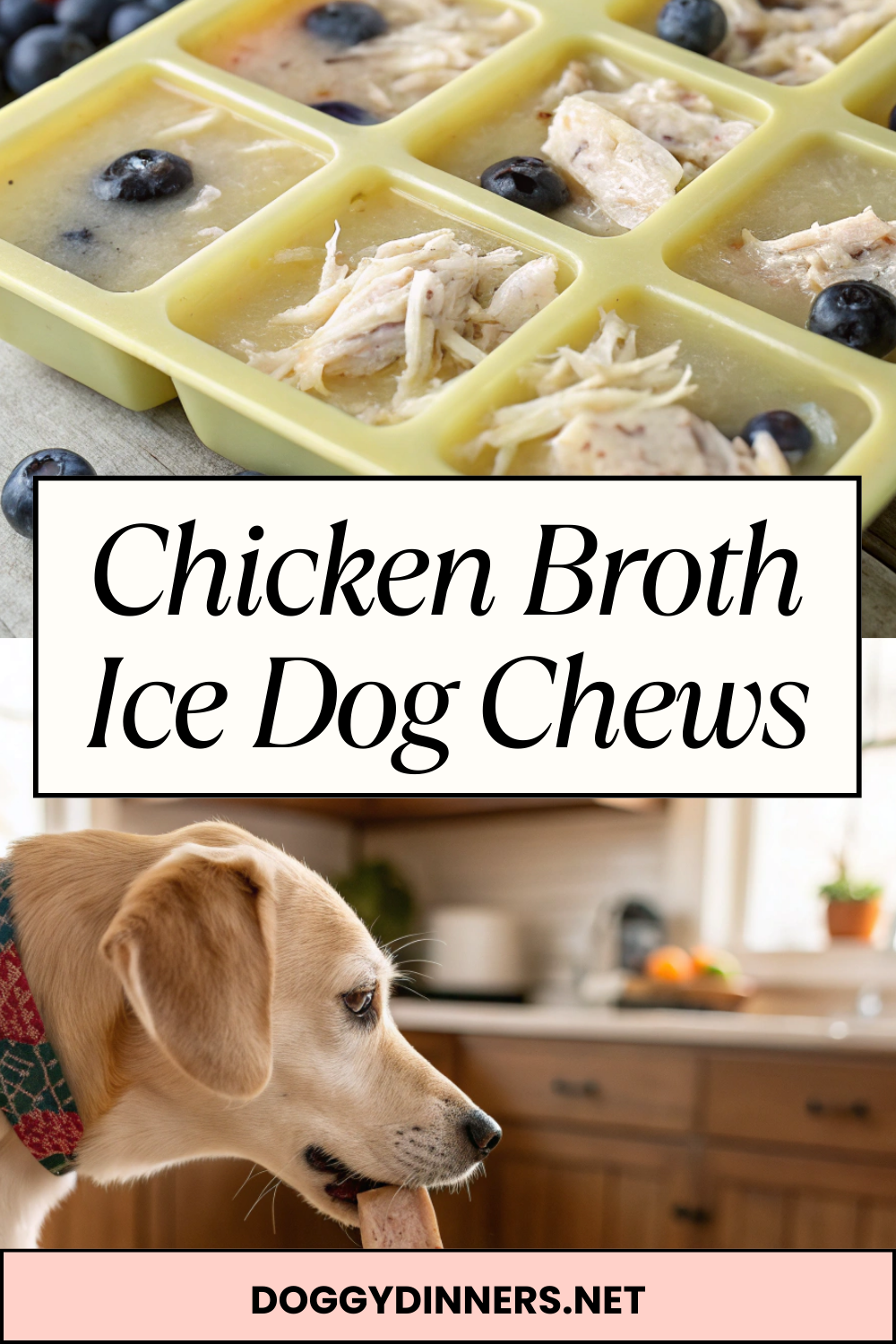
Chicken Broth Ice Dog Chews
Ingredients
Equipment
Method
- Measure 2 tablespoons warm water in a small bowl and sprinkle 1 tablespoon unflavored gelatin over it; let bloom 2–3 minutes.
- Warm 1/2 cup of the low-sodium chicken broth (in a small saucepan or microwave-safe bowl) until warm but not boiling; stir in the bloomed gelatin until fully dissolved.
- In a medium mixing bowl whisk together the remaining 1 1/2 cups chilled low-sodium chicken broth, 1/2 cup plain Greek yogurt, and 1/4 cup pumpkin puree until smooth.
- Pour the dissolved gelatin-plus-broth into the bowl and whisk to combine so the mixture will set well in the freezer.
- Fold in 1/2 cup cooked shredded chicken, 1/3 cup grated carrot, 1/4 cup fresh blueberries, and 1 tablespoon chopped parsley. If mixture seems too thick for pouring, add up to 1 tablespoon water to loosen.
- Place a silicone ice cube tray or small molds on a flat tray. Spoon the mixture evenly into 12 wells, pressing shredded chicken slightly so each portion has some protein.
- Allow mixture to cool at room temperature for 10 minutes, then transfer to the freezer and freeze for at least 4 hours or overnight until fully set.
- Pop chews from the tray and serve one or two as an occasional treat depending on your dog’s size—larger dogs can have more; smaller dogs should get smaller portions.
- Store extras in a sealed container or freezer bag for up to 3 months; thaw one or two in the refrigerator or at room temperature for a few minutes before serving if preferred.





Comments and Reviews